Ice Age dice show early Native Americans may have understood probability
Ice Age hunter-gatherers "were intentionally relying on random outcomes in repeatable, rule-based ways."
Signal weather
Stable
The story has moved beyond the first headline and now acts as a reliable context anchor.
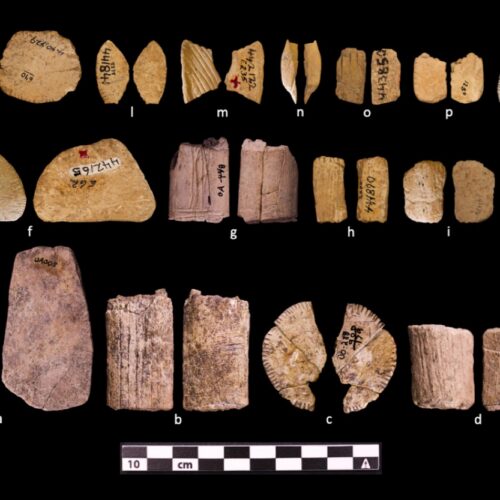
Native Americans have been playing with dice in games of chance for more than 12,000 years, according to a new paper published in the journal American Antiquity. And the oldest examples of Native American dice predate the earliest currently known dice in the Old World by millennia. “Historians have traditionally treated dice and probability as Old World innovations,” said author Robert Madden, a graduate student at Colorado State University. “What the archaeological record shows is that ancient Native American groups were deliberately making objects designed to produce random outcomes, and using those outcomes in structured games, thousands of years earlier than previously recognized.” Madden's interest in Native American gaming started with Maya ballgames and then expanded to include Native American dice and games of chance. These were rudimentary dice with just two sides, rather than the six sides of modern dice, typically described as "binary lots." And Madden found they were common to virtually every Native American tribe. Archaeologists had traced the use of such dice back 2,000 years, but most were hesitant to conclude that dice-like artifacts older than that were, in fact, dice. Read full article Comments
Stay on the signal
Follow Ice Age dice show early Native Americans may have understood probability
Follow this story beyond a single article: new follow-ups, adjacent sources, and the evolving storyline.
Story map
Understand this topic fast
A quick entry into the story: why it matters now, who is involved, and where to go next for context.
Why it matters now
Topic constellation
Open the live map for this story
See which entities, story threads, sources, and follow-up articles shape this story right now.
Click nodes to continue
Story timeline
Continue with this story
A short sequence of events and follow-up stories to understand the arc quickly.
How reliable this looks
Signal and trust for Ars Technica
This source works at a rapid pace: 100% of recent stories land in the hot window, and 0% carry visible search signal.
Reliability
92
Freshness
100
Sources in storyline
1
Related articles
More stories that share tags, source, or category context.
When does learning from data work (math starting from basic probability)
Comments
Signal weather
Momentum is building quickly, so this card is a good early entry point into the topic.
Why now
Fresh coverage with immediate momentum.
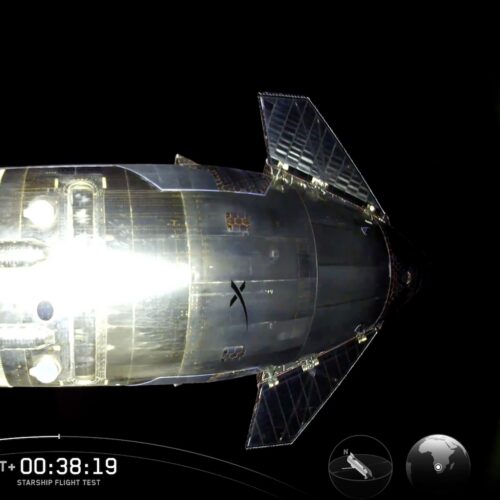
SpaceX's Starship V3—still a work in progress—mostly successful on first flight
SpaceX has more to prove before flying Starship all the way to low-Earth orbit.
Signal weather
Momentum is building quickly, so this card is a good early entry point into the topic.
Why now
Fresh coverage with immediate momentum.

Two space shuttle-era spacewalkers enter Astronaut Hall of Fame
"Two astronauts whose careers embody excellence, leadership, and service."
Signal weather
Momentum is building quickly, so this card is a good early entry point into the topic.
Why now
Fresh coverage with immediate momentum.

China’s shark finning could lead to US seafood sanctions
A formal petition to the US government calls for sanctions on Chinese seafood imports.
Signal weather
Momentum is building quickly, so this card is a good early entry point into the topic.
Why now
Fresh coverage with immediate momentum.
More from Ars Technica
Fresh reporting and follow-up coverage from the same newsroom.
SpaceX's Starship V3—still a work in progress—mostly successful on first flight
SpaceX has more to prove before flying Starship all the way to low-Earth orbit.
Signal weather
Momentum is building quickly, so this card is a good early entry point into the topic.
Why now
Fresh coverage with immediate momentum.
Two space shuttle-era spacewalkers enter Astronaut Hall of Fame
"Two astronauts whose careers embody excellence, leadership, and service."
Signal weather
Momentum is building quickly, so this card is a good early entry point into the topic.
Why now
Fresh coverage with immediate momentum.
China’s shark finning could lead to US seafood sanctions
A formal petition to the US government calls for sanctions on Chinese seafood imports.
Signal weather
Momentum is building quickly, so this card is a good early entry point into the topic.
Why now
Fresh coverage with immediate momentum.
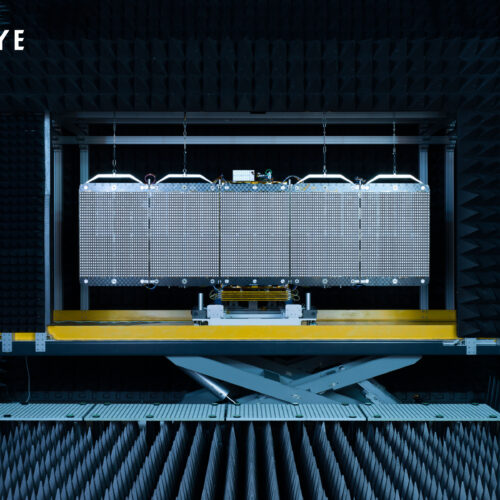
Four Russian satellites are now within striking distance of an ICEYE radarsat
"This capability is not common for satellites conducting typical missions."
Signal weather
Momentum is building quickly, so this card is a good early entry point into the topic.
Why now
Fresh coverage with immediate momentum.