Physicists think they've solved the muon mystery
Results dash hopes for a fifth force but provide very precise proof of Standard Model and QFT.
Signal weather
Stable
The story has moved beyond the first headline and now acts as a reliable context anchor.
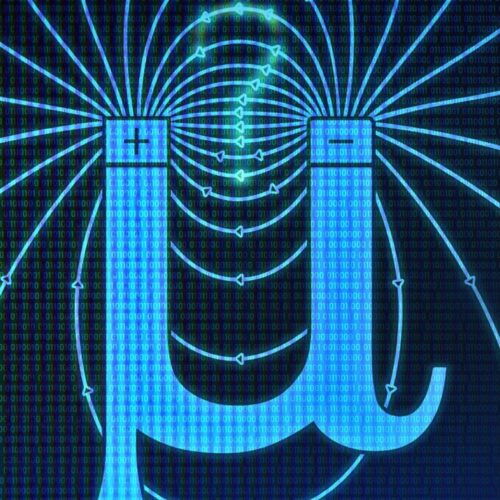
Physicists have spent the last 20 years pondering an apparent discrepancy between experimental results and theoretical predictions for the magnetic properties of the muon, the electron's heavier cousin—a mismatch that hinted at a possible fifth force. But according to a new paper published in the journal Nature, the discrepancy is due to a calculation fluke, not exciting new physics, so the Standard Model of particle physics is still holding strong. “There were many calculations in the last 60 years or so, and as they got more and more precise, they all pointed toward a discrepancy and a new interaction that would upend known laws of physics,” said co-author Zoltan Fodor, a physicist at Penn State University. “We applied a new method to calculate this discrepancy quantity, and we showed that it’s not there. This new interaction we hoped for simply is not there. The old interactions can explain the value completely.” As previously reported, the muon (a member of the lepton classification) is the heavier second-generation cousin of the electron—the tau is the third-generation cousin—and that makes muons particularly sensitive to virtual particles popping into and out of existence in the quantum vacuum, since they can briefly interact with those virtual particles. Muons are special to physicists because they are light enough to be plentiful yet heavy enough to be used experimentally to probe the accuracy of the Standard Model of particle physics. Read full article Comments
Stay on the signal
Follow Physicists think they've solved the muon mystery
Follow this story beyond a single article: new follow-ups, adjacent sources, and the evolving storyline.
Story map
Understand this topic fast
A quick entry into the story: why it matters now, who is involved, and where to go next for context.
Why it matters now
Topic constellation
Open the live map for this story
See which entities, story threads, sources, and follow-up articles shape this story right now.
Click nodes to continue
Entity pages
Story timeline
Continue with this story
A short sequence of events and follow-up stories to understand the arc quickly.
How reliable this looks
Signal and trust for Ars Technica
This source works at a rapid pace: 100% of recent stories land in the hot window, and 0% carry visible search signal.
Reliability
92
Freshness
100
Sources in storyline
2
Related articles
More stories that share tags, source, or category context.
Open Repair Data Standard
Comments
Signal weather
Momentum is building quickly, so this card is a good early entry point into the topic.
Why now
Fresh coverage with immediate momentum.
The AV2 Video Standard Has Released (Final v1.0 Specification)
Comments
Signal weather
Momentum is building quickly, so this card is a good early entry point into the topic.
Why now
Fresh coverage with immediate momentum.
First benchmark results from the Snapdragon 8cx Gen 3-powered Radxa Dragon Q8B
Comments
Signal weather
Momentum is building quickly, so this card is a good early entry point into the topic.
Why now
Fresh coverage with immediate momentum.
Real-time LLM Inference on Standard GPUs: 3k tokens/s per request
Comments
Signal weather
The story has moved beyond the first headline and now acts as a reliable context anchor.
Why now
This story is still moving and pulling follow-up coverage.
More from Ars Technica
Fresh reporting and follow-up coverage from the same newsroom.

Scientists ejected from diabetes conference for distributing journal reprints
Those ousted included ADA journal editor-in-chief Steven Kahn and former ADA president Desmond Schatz
Signal weather
Momentum is building quickly, so this card is a good early entry point into the topic.
Why now
Fresh coverage with immediate momentum.
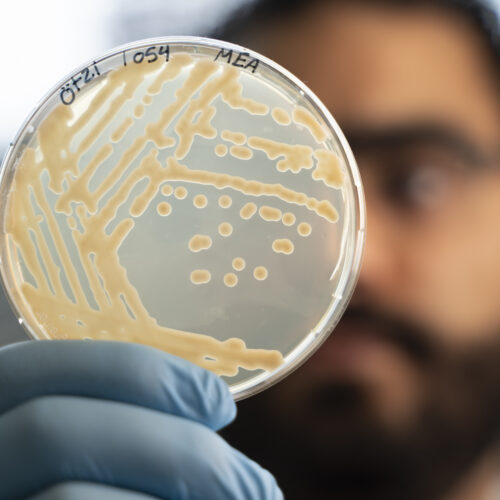
Some ancient microbes frozen with Ötzi the Iceman are still growing
What’s the difference between a person, an artifact, and an ecosystem?
Signal weather
Momentum is building quickly, so this card is a good early entry point into the topic.
Why now
Fresh coverage with immediate momentum.

Baby botulism outbreak: FDA still doesn't know cause—or how to prevent it
In the end, the three companies involved all point the finger at each other.
Signal weather
Momentum is building quickly, so this card is a good early entry point into the topic.
Why now
Fresh coverage with immediate momentum.
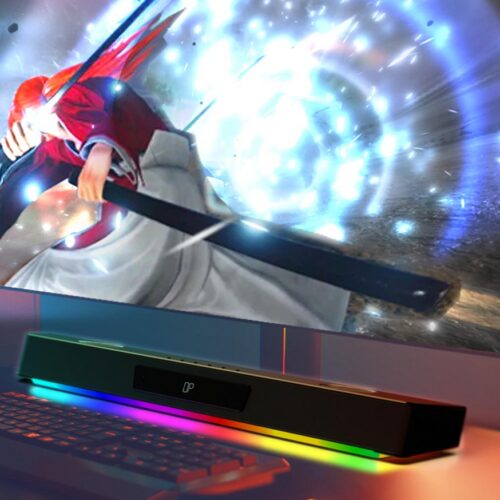
How a USB-connected speaker can infect a PC without ever being touched
Seller of the Sound Blaster Katana V2X doesn't consider the behavior a vulnerability.
Signal weather
Momentum is building quickly, so this card is a good early entry point into the topic.
Why now
Fresh coverage with immediate momentum.