Google unveils two new TPUs designed for the "agentic era"
Google's new generation of Tensor AI chips is actually two chips, one for inference and one for training.
Signal weather
Stable
The story has moved beyond the first headline and now acts as a reliable context anchor.
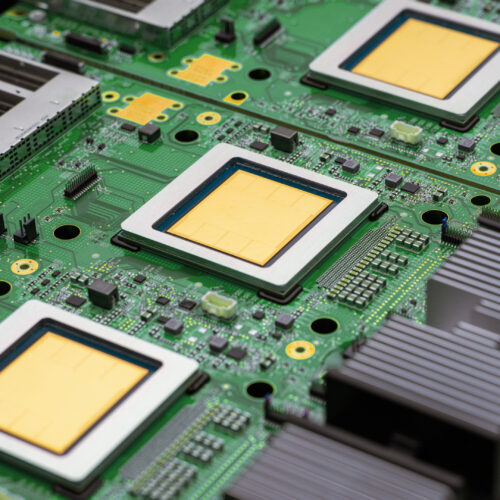
Most of the companies that have fully committed to building AI models are gobbling up every Nvidia AI accelerator they can get, but Google has taken a different approach. Most of its cloud AI infrastructure is based on its line of custom Tensor processing units (TPUs). After announcing the seventh-gen Ironwood TPU in 2025, the company has moved on to the eighth-gen version, but it's not just a faster iteration of the same chip. The new TPUs come in two flavors, providing Google and its customers with an AI platform that is faster and more efficient, the company says. Google is pushing the idea that the "agent era" is fundamentally different from the AI systems that came before, necessitating a new approach to the hardware. So engineers have devised the TPU8t (for training) and the TPU 8i (for inference). Before AI models become something you can use to analyze data or make silly memes, they need to be trained. The TPU 8t was designed specifically for this part of the AI lifecycle to reduce the training time for frontier AI models from months to weeks. Read full article Comments
Stay on the signal
Follow Google unveils two new TPUs designed for the "agentic era"
Follow this story beyond a single article: new follow-ups, adjacent sources, and the evolving storyline.
Story map
Understand this topic fast
A quick entry into the story: why it matters now, who is involved, and where to go next for context.
Why it matters now
Topic constellation
Open the live map for this story
See which entities, story threads, sources, and follow-up articles shape this story right now.
Click nodes to continue
Entity pages
Story timeline
Continue with this story
A short sequence of events and follow-up stories to understand the arc quickly.
How reliable this looks
Signal and trust for Ars Technica
This source works at a rapid pace: 100% of recent stories land in the hot window, and 0% carry visible search signal.
Reliability
92
Freshness
100
Sources in storyline
3
Related articles
More stories that share tags, source, or category context.
Beyond Instagram: Introducing the next generation of social apps
These newer social apps offer alternatives to Big Tech’s feeds, focusing on interests, creativity, and community.
Signal weather
Momentum is building quickly, so this card is a good early entry point into the topic.
Why now
Fresh coverage with immediate momentum.
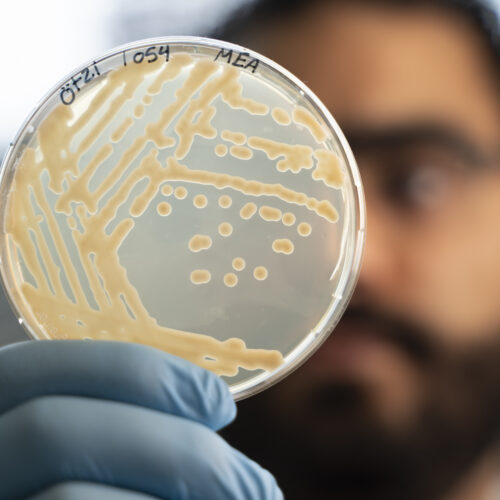
Some ancient microbes frozen with Ötzi the Iceman are still growing
What’s the difference between a person, an artifact, and an ecosystem?
Signal weather
Momentum is building quickly, so this card is a good early entry point into the topic.
Why now
Fresh coverage with immediate momentum.
Звонит «мама», но это не она. Android теперь сбрасывает звонок мошенников раньше, чем вы успеете сказать «алло»
Google добавил в Android защиту от звонков с клонированным голосом.
Signal weather
Momentum is building quickly, so this card is a good early entry point into the topic.
Why now
Fresh coverage with immediate momentum.

Baby botulism outbreak: FDA still doesn't know cause—or how to prevent it
In the end, the three companies involved all point the finger at each other.
Signal weather
Momentum is building quickly, so this card is a good early entry point into the topic.
Why now
Fresh coverage with immediate momentum.
More from Ars Technica
Fresh reporting and follow-up coverage from the same newsroom.

Scientists ejected from diabetes conference for distributing journal reprints
Those ousted included ADA journal editor-in-chief Steven Kahn and former ADA president Desmond Schatz
Signal weather
Momentum is building quickly, so this card is a good early entry point into the topic.
Why now
Fresh coverage with immediate momentum.
Some ancient microbes frozen with Ötzi the Iceman are still growing
What’s the difference between a person, an artifact, and an ecosystem?
Signal weather
Momentum is building quickly, so this card is a good early entry point into the topic.
Why now
Fresh coverage with immediate momentum.
Baby botulism outbreak: FDA still doesn't know cause—or how to prevent it
In the end, the three companies involved all point the finger at each other.
Signal weather
Momentum is building quickly, so this card is a good early entry point into the topic.
Why now
Fresh coverage with immediate momentum.

How a USB-connected speaker can infect a PC without ever being touched
Seller of the Sound Blaster Katana V2X doesn't consider the behavior a vulnerability.
Signal weather
Momentum is building quickly, so this card is a good early entry point into the topic.
Why now
Fresh coverage with immediate momentum.