Over a year later, AMD is bringing improved FSR 4 upscaling to its older GPUs
FSR 4.1 running on RDNA3 or RDNA2 GPUs may take a bigger performance hit.
Signal weather
Stable
The story has moved beyond the first headline and now acts as a reliable context anchor.

When AMD announced version 4 of its FidelityFX Super Resolution (FSR) graphics upscaling technology early last year, it came with strings attached: The improved hardware-backed image quality would be available only on Radeon RX 9000-series GPUs based on the RDNA4 architecture, not on any older Radeon GPUs. To date, AMD has released only a handful of 90-series graphics cards, including the RX 9070 XT, the RX 9070, the 8GB and 16GB versions of the RX 9060 XT, and an RX 9060 that's only available to PC companies rather than end users. That list notably doesn't include any integrated GPUs, such as those found in AMD-powered thin-and-light laptops or gaming handhelds like the Steam Deck and its imitators. Over a year later, AMD Computing and Graphics SVP Jack Huynh has announced that a version of FSR 4 is finally coming to older GPUs. The rollout will begin in July with RDNA3- and 3.5-based GPUs, which include the Radeon RX 7000 series, as well as integrated GPUs like the Radeon 890M and Radeon 8060S.Read full article Comments
Stay on the signal
Follow Over a year later, AMD is bringing improved FSR 4 upscaling to its older GPUs
Follow this story beyond a single article: new follow-ups, adjacent sources, and the evolving storyline.
Story map
Understand this topic fast
A quick entry into the story: why it matters now, who is involved, and where to go next for context.
Why it matters now
Topic constellation
Open the live map for this story
See which entities, story threads, sources, and follow-up articles shape this story right now.
Click nodes to continue
Entity pages
Story timeline
Continue with this story
A short sequence of events and follow-up stories to understand the arc quickly.
How reliable this looks
Signal and trust for Ars Technica
This source works at a rapid pace: 100% of recent stories land in the hot window, and 0% carry visible search signal.
Reliability
92
Freshness
100
Sources in storyline
1
Related articles
More stories that share tags, source, or category context.

Apple and Audi alumni have made a luxe EV based on the moon buggy
The Amble One is a street-legal $25,000 electric buggy designed for luxury resorts.
Signal weather
Momentum is building quickly, so this card is a good early entry point into the topic.
Why now
Fresh coverage with immediate momentum.

South Korea plans to train entire military as "drone warriors"
Half-million strong military will train on drones as “universal combat tool.”
Signal weather
Momentum is building quickly, so this card is a good early entry point into the topic.
Why now
Fresh coverage with immediate momentum.
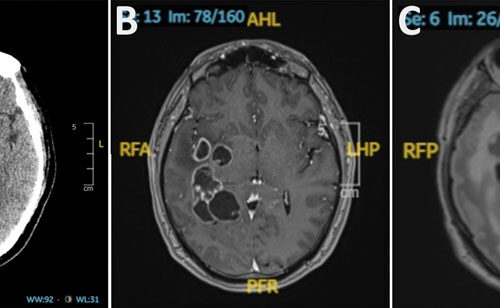
Doctors suspected man had brain cancer. He actually had worms.
His doctors went looking for cancer, then they saw the worms' heads.
Signal weather
Momentum is building quickly, so this card is a good early entry point into the topic.
Why now
Fresh coverage with immediate momentum.

Streaming services’ obnoxiously loud ads become illegal on July 1 in California
Illinois passed a similar law, giving services more incentive to make ads less booming.
Signal weather
Momentum is building quickly, so this card is a good early entry point into the topic.
Why now
Fresh coverage with immediate momentum.
More from Ars Technica
Fresh reporting and follow-up coverage from the same newsroom.
Apple and Audi alumni have made a luxe EV based on the moon buggy
The Amble One is a street-legal $25,000 electric buggy designed for luxury resorts.
Signal weather
Momentum is building quickly, so this card is a good early entry point into the topic.
Why now
Fresh coverage with immediate momentum.
South Korea plans to train entire military as "drone warriors"
Half-million strong military will train on drones as “universal combat tool.”
Signal weather
Momentum is building quickly, so this card is a good early entry point into the topic.
Why now
Fresh coverage with immediate momentum.
Doctors suspected man had brain cancer. He actually had worms.
His doctors went looking for cancer, then they saw the worms' heads.
Signal weather
Momentum is building quickly, so this card is a good early entry point into the topic.
Why now
Fresh coverage with immediate momentum.
Streaming services’ obnoxiously loud ads become illegal on July 1 in California
Illinois passed a similar law, giving services more incentive to make ads less booming.
Signal weather
Momentum is building quickly, so this card is a good early entry point into the topic.
Why now
Fresh coverage with immediate momentum.