"Oobleck" still holds some surprises
Dense drops of oobleck with high shear rates spread out like a liquid before stiffening into a solid.
Signal weather
Stable
The story has moved beyond the first headline and now acts as a reliable context anchor.
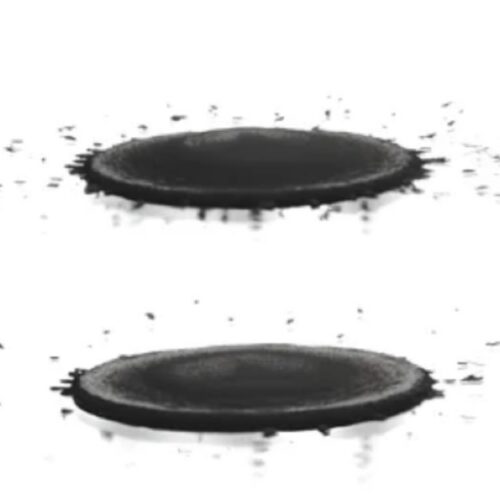
Mixing corn starch and water in appropriate amounts produces a slurry that is liquid when stirred slowly but hardens when you punch it—a substance colorfully dubbed “oobleck.” (The name derives from a 1949 Dr. Seuss children’s book, Bartholomew and the Oobleck.) High-speed imaging and force measurements have revealed another surprising property of oobleck drops hitting a flat surface, according to a new paper published in the journal Physical Review Letters. As previously reported, in an ideal fluid, viscosity largely depends on temperature and pressure: Water will continue to flow regardless of other forces acting on it, such as stirring or mixing. In a non-Newtonian fluid, the viscosity changes in response to an applied strain or shearing force, thereby straddling the boundary between liquid and solid behavior. Stirring a cup of water produces a shearing force, and the water shears to move out of the way. The viscosity remains unchanged. But for non-Newtonian fluids like oobleck, the viscosity changes when a shearing force is applied. Ketchup, for instance, is a shear-thickening non-Newtonian fluid, which is one reason smacking the bottom of the bottle doesn’t make the ketchup come out any faster; the application of force increases the viscosity. Yogurt, gravy, mud, pudding, and thickened pie fillings are other examples. And so is oobleck. Read full article Comments
Stay on the signal
Follow "Oobleck" still holds some surprises
Follow this story beyond a single article: new follow-ups, adjacent sources, and the evolving storyline.
Story map
Understand this topic fast
A quick entry into the story: why it matters now, who is involved, and where to go next for context.
Why it matters now
Topic constellation
Open the live map for this story
See which entities, story threads, sources, and follow-up articles shape this story right now.
Click nodes to continue
Story timeline
Continue with this story
A short sequence of events and follow-up stories to understand the arc quickly.
How reliable this looks
Signal and trust for Ars Technica
This source works at a rapid pace: 100% of recent stories land in the hot window, and 0% carry visible search signal.
Reliability
92
Freshness
100
Sources in storyline
1
Related articles
More stories that share tags, source, or category context.
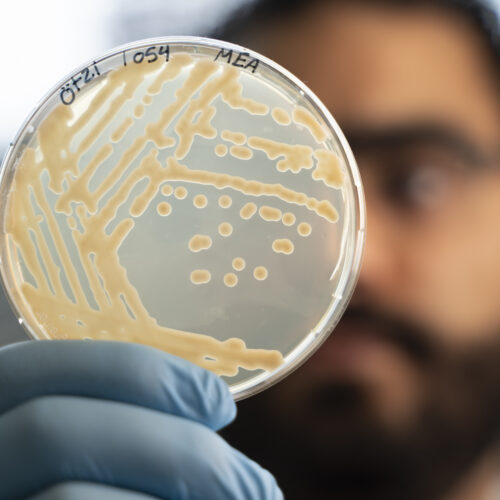
Some ancient microbes frozen with Ötzi the Iceman are still growing
What’s the difference between a person, an artifact, and an ecosystem?
Signal weather
Momentum is building quickly, so this card is a good early entry point into the topic.
Why now
Fresh coverage with immediate momentum.
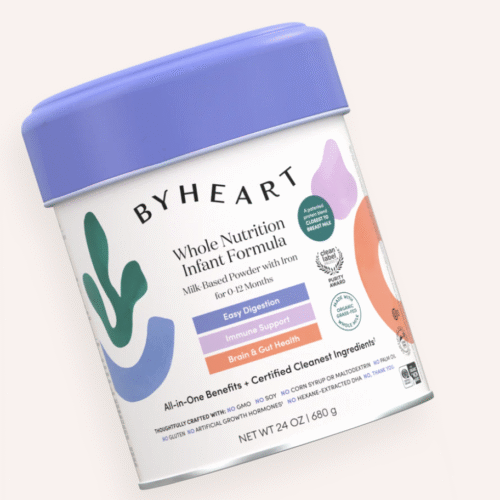
Baby botulism outbreak: FDA still doesn't know cause—or how to prevent it
In the end, the three companies involved all point the finger at each other.
Signal weather
Momentum is building quickly, so this card is a good early entry point into the topic.
Why now
Fresh coverage with immediate momentum.
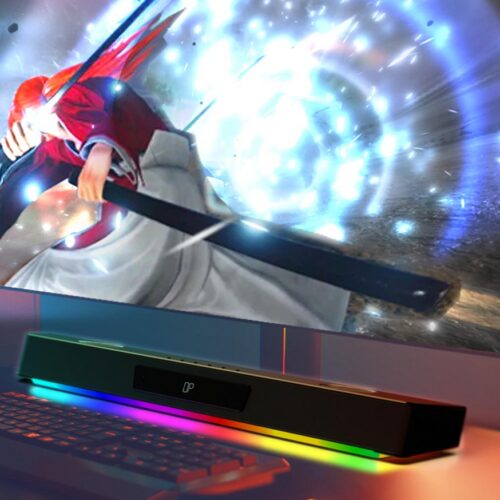
How a USB-connected speaker can infect a PC without ever being touched
Seller of the Sound Blaster Katana V2X doesn't consider the behavior a vulnerability.
Signal weather
Momentum is building quickly, so this card is a good early entry point into the topic.
Why now
Fresh coverage with immediate momentum.
Small modular nuclear reactor reaches criticality in first test
The reactor, from a startup called Antares, isn't ready to generate power yet.
Signal weather
Momentum is building quickly, so this card is a good early entry point into the topic.
Why now
Fresh coverage with immediate momentum.
More from Ars Technica
Fresh reporting and follow-up coverage from the same newsroom.

Scientists ejected from diabetes conference for distributing journal reprints
Those ousted included ADA journal editor-in-chief Steven Kahn and former ADA president Desmond Schatz
Signal weather
Momentum is building quickly, so this card is a good early entry point into the topic.
Why now
Fresh coverage with immediate momentum.
Some ancient microbes frozen with Ötzi the Iceman are still growing
What’s the difference between a person, an artifact, and an ecosystem?
Signal weather
Momentum is building quickly, so this card is a good early entry point into the topic.
Why now
Fresh coverage with immediate momentum.
Baby botulism outbreak: FDA still doesn't know cause—or how to prevent it
In the end, the three companies involved all point the finger at each other.
Signal weather
Momentum is building quickly, so this card is a good early entry point into the topic.
Why now
Fresh coverage with immediate momentum.
How a USB-connected speaker can infect a PC without ever being touched
Seller of the Sound Blaster Katana V2X doesn't consider the behavior a vulnerability.
Signal weather
Momentum is building quickly, so this card is a good early entry point into the topic.
Why now
Fresh coverage with immediate momentum.