NASA provides some details about Artemis III, but hard decisions remain
"NASA also is defining the concept of operations for the mission."
Signal weather
Stable
The story has moved beyond the first headline and now acts as a reliable context anchor.
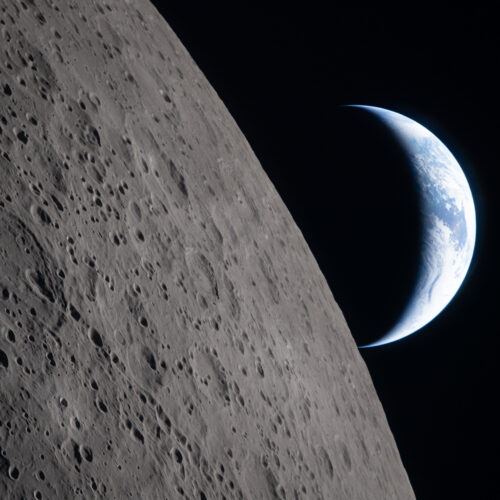
NASA announced Wednesday that it will fly the Artemis III mission in low-Earth orbit and that it continues to target 2027 for this stepping-stone flight that will help land humans on the Moon. The space agency chose the orbit close to Earth—as opposed to a higher orbit—because it would preserve the final remaining Interim Cryogenic Propulsion Stage for launching the Artemis IV landing mission later this decade. Instead, NASA will use a "spacer" to simulate the mass and overall dimensions of an upper stage but without propulsive capabilities. The additional information released this week follows a decision made by NASA Administrator Jared Isaacman three months ago to shuffle the agency's Artemis plans in order to accelerate a lunar landing. Read full article Comments
Stay on the signal
Follow NASA provides some details about Artemis III, but hard decisions remain
Follow this story beyond a single article: new follow-ups, adjacent sources, and the evolving storyline.
Story map
Understand this topic fast
A quick entry into the story: why it matters now, who is involved, and where to go next for context.
Why it matters now
Topic constellation
Open the live map for this story
See which entities, story threads, sources, and follow-up articles shape this story right now.
Click nodes to continue
Entity pages
Story timeline
Continue with this story
A short sequence of events and follow-up stories to understand the arc quickly.
How reliable this looks
Signal and trust for Ars Technica
This source works at a rapid pace: 100% of recent stories land in the hot window, and 0% carry visible search signal.
Reliability
92
Freshness
100
Sources in storyline
2
Related articles
More stories that share tags, source, or category context.
АЗС на орбите. NASA испытало «заправочный пистолет» для кораблей к Луне и Марсу
Криосоединитель позволит кораблям получать сверххолодное топливо прямо на орбите.
Signal weather
Momentum is building quickly, so this card is a good early entry point into the topic.
Why now
Fresh coverage with immediate momentum.

Apple and Audi alumni have made a luxe EV based on the moon buggy
The Amble One is a street-legal $25,000 electric buggy designed for luxury resorts.
Signal weather
Momentum is building quickly, so this card is a good early entry point into the topic.
Why now
Fresh coverage with immediate momentum.

South Korea plans to train entire military as "drone warriors"
Half-million strong military will train on drones as “universal combat tool.”
Signal weather
Momentum is building quickly, so this card is a good early entry point into the topic.
Why now
Fresh coverage with immediate momentum.

Doctors suspected man had brain cancer. He actually had worms.
His doctors went looking for cancer, then they saw the worms' heads.
Signal weather
Momentum is building quickly, so this card is a good early entry point into the topic.
Why now
Fresh coverage with immediate momentum.
More from Ars Technica
Fresh reporting and follow-up coverage from the same newsroom.
Apple and Audi alumni have made a luxe EV based on the moon buggy
The Amble One is a street-legal $25,000 electric buggy designed for luxury resorts.
Signal weather
Momentum is building quickly, so this card is a good early entry point into the topic.
Why now
Fresh coverage with immediate momentum.
South Korea plans to train entire military as "drone warriors"
Half-million strong military will train on drones as “universal combat tool.”
Signal weather
Momentum is building quickly, so this card is a good early entry point into the topic.
Why now
Fresh coverage with immediate momentum.
Doctors suspected man had brain cancer. He actually had worms.
His doctors went looking for cancer, then they saw the worms' heads.
Signal weather
Momentum is building quickly, so this card is a good early entry point into the topic.
Why now
Fresh coverage with immediate momentum.

Streaming services’ obnoxiously loud ads become illegal on July 1 in California
Illinois passed a similar law, giving services more incentive to make ads less booming.
Signal weather
Momentum is building quickly, so this card is a good early entry point into the topic.
Why now
Fresh coverage with immediate momentum.