Male bowerbirds prefer to dazzle females with bright human-made items
"It’s a reminder of how human activity is changing the natural world in unanticipated ways.”
Signal weather
Rising
Momentum is building quickly, so this card is a good early entry point into the topic.
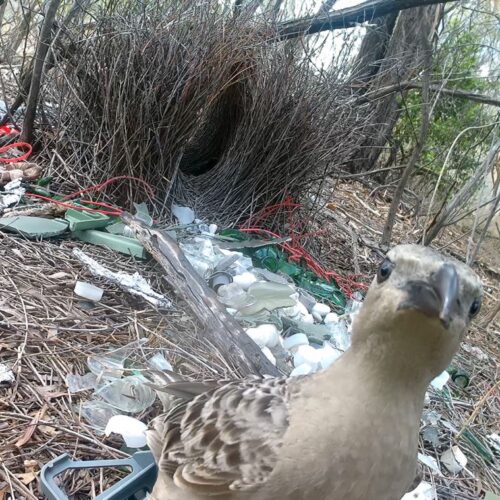
Male bowerbirds are notorious for their complex mating rituals. They build intricate tunnels out of twigs—the bowers from which they get their name—and then decorate them with random colorful items gleaned from the environment. When a female of the species shows up to check out a male's fancy digs, the male tosses his shiniest objects in her direction and shows off his plumage in hopes of impressing her. According to a new paper published in the journal Royal Society Open Science by University of Exeter scientists, urbanization and the associated growing availability of brightly colored human-made items have had a significant impact on courtship display behavior in Australian male bowerbirds. There are marked differences in the choice of decorations for bowerbirds in urban versus rural environments. This might be because urban birds simply have greater access to the items than their rural counterparts, since birds in both environments show a marked preference for human items. The University of Exeter researchers monitored the bowers of 61 male great bowerbirds in two sites in Australia's northern Queensland—the rural Dreghorn Cattle Station and the urban Townsville City—during the prime breeding season (September–December 2023). Then they photographed the bower decorations in situ from above in both visible and UV light (bowerbirds can see in the UV range), using an umbrella to create diffuse lighting. Read full article Comments
Stay on the signal
Follow Male bowerbirds prefer to dazzle females with bright human-made items
Follow this story beyond a single article: new follow-ups, adjacent sources, and the evolving storyline.
Story map
Understand this topic fast
A quick entry into the story: why it matters now, who is involved, and where to go next for context.
Why it matters now
Topic constellation
Open the live map for this story
See which entities, story threads, sources, and follow-up articles shape this story right now.
Click nodes to continue
Entity pages
Story timeline
Continue with this story
A short sequence of events and follow-up stories to understand the arc quickly.
How reliable this looks
Signal and trust for Ars Technica
This source works at a rapid pace: 100% of recent stories land in the hot window, and 0% carry visible search signal.
Reliability
92
Freshness
100
Sources in storyline
1
Related articles
More stories that share tags, source, or category context.
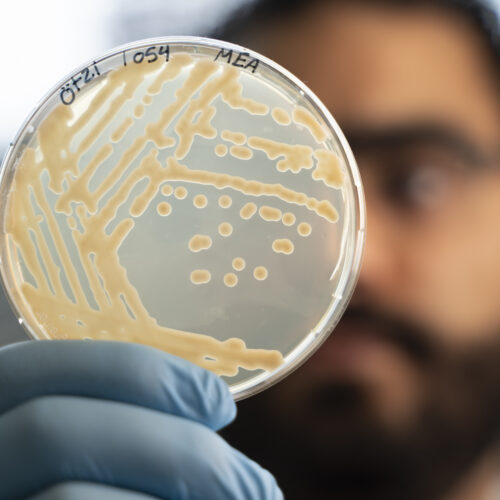
Some ancient microbes frozen with Ötzi the Iceman are still growing
What’s the difference between a person, an artifact, and an ecosystem?
Signal weather
Momentum is building quickly, so this card is a good early entry point into the topic.
Why now
Fresh coverage with immediate momentum.

Baby botulism outbreak: FDA still doesn't know cause—or how to prevent it
In the end, the three companies involved all point the finger at each other.
Signal weather
Momentum is building quickly, so this card is a good early entry point into the topic.
Why now
Fresh coverage with immediate momentum.

How a USB-connected speaker can infect a PC without ever being touched
Seller of the Sound Blaster Katana V2X doesn't consider the behavior a vulnerability.
Signal weather
Momentum is building quickly, so this card is a good early entry point into the topic.
Why now
Fresh coverage with immediate momentum.
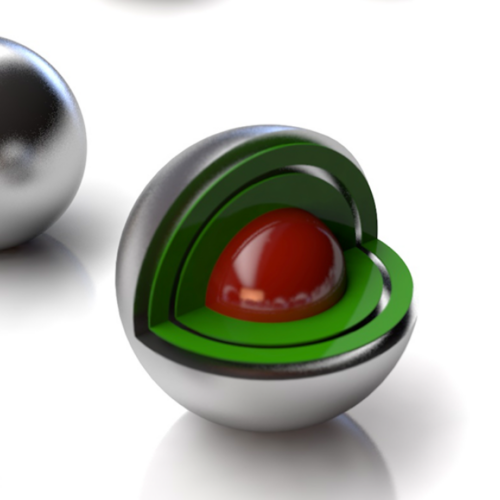
Small modular nuclear reactor reaches criticality in first test
The reactor, from a startup called Antares, isn't ready to generate power yet.
Signal weather
Momentum is building quickly, so this card is a good early entry point into the topic.
Why now
Fresh coverage with immediate momentum.
More from Ars Technica
Fresh reporting and follow-up coverage from the same newsroom.
Some ancient microbes frozen with Ötzi the Iceman are still growing
What’s the difference between a person, an artifact, and an ecosystem?
Signal weather
Momentum is building quickly, so this card is a good early entry point into the topic.
Why now
Fresh coverage with immediate momentum.
Baby botulism outbreak: FDA still doesn't know cause—or how to prevent it
In the end, the three companies involved all point the finger at each other.
Signal weather
Momentum is building quickly, so this card is a good early entry point into the topic.
Why now
Fresh coverage with immediate momentum.
How a USB-connected speaker can infect a PC without ever being touched
Seller of the Sound Blaster Katana V2X doesn't consider the behavior a vulnerability.
Signal weather
Momentum is building quickly, so this card is a good early entry point into the topic.
Why now
Fresh coverage with immediate momentum.
Small modular nuclear reactor reaches criticality in first test
The reactor, from a startup called Antares, isn't ready to generate power yet.
Signal weather
Momentum is building quickly, so this card is a good early entry point into the topic.
Why now
Fresh coverage with immediate momentum.