You're likely already infected with a brain-eating virus you've never heard of
Fatal brain infection was thought to be from profound immune suppression. Not anymore.
Signal weather
Stable
The story has moved beyond the first headline and now acts as a reliable context anchor.
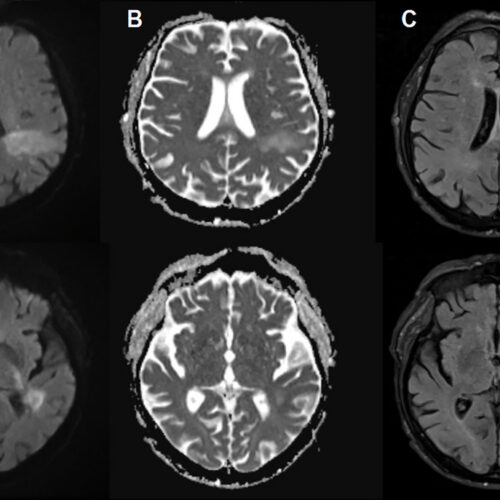
There's a virus you may have never heard of before that is estimated to infect up to 90 percent of people and lurks quietly in your cells for life—but if it becomes activated, it will destroy your brain. If that's not startling enough, researchers reported this week that there may be a new way for this virus to activate—one that affects up to 10 percent of adults worldwide. The virus is the human polyomavirus 2, commonly called either the JC virus or John Cunningham virus, named after the poor patient from whom it was first isolated in 1971. It shows up in the urine and stool of infected people and spreads via the fecal-oral route. Many people are thought to be infected early in life, and blood testing surveys have suggested that 50–90 percent of adults have been exposed at some point. Researchers hypothesize that the initial site of infection is the tonsils, or perhaps the gastrointestinal tract. But wherever it happens, that initial infection is asymptomatic. At that point, a person is infected with what's called the archetype JC virus, which quietly sets up a persistent but utterly silent lifelong infection. Read full article Comments
Stay on the signal
Follow You're likely already infected with a brain-eating virus you've never heard of
Follow this story beyond a single article: new follow-ups, adjacent sources, and the evolving storyline.
Story map
Understand this topic fast
A quick entry into the story: why it matters now, who is involved, and where to go next for context.
Why it matters now
Topic constellation
Open the live map for this story
See which entities, story threads, sources, and follow-up articles shape this story right now.
Click nodes to continue
Story timeline
Continue with this story
A short sequence of events and follow-up stories to understand the arc quickly.
How reliable this looks
Signal and trust for Ars Technica
This source works at a rapid pace: 100% of recent stories land in the hot window, and 0% carry visible search signal.
Reliability
92
Freshness
100
Sources in storyline
1
Related articles
More stories that share tags, source, or category context.

DHS can’t create vast DNA database to track ICE critics, lawsuit says
Lawsuit accuses DHS of plugging DNA database into ICE surveillance machine.
Signal weather
Momentum is building quickly, so this card is a good early entry point into the topic.
Why now
Fresh coverage with immediate momentum.

Mozilla says 271 vulnerabilities found by Mythos have "almost no false positives"
The developer of Firefox says it has "completely bought in" on AI-assisted bug discovery.
Signal weather
Momentum is building quickly, so this card is a good early entry point into the topic.
Why now
Fresh coverage with immediate momentum.
Google unveils screenless Fitbit Air and Google Health app to replace Fitbit
The $100 Fitbit Air is available for preorder today.
Signal weather
Momentum is building quickly, so this card is a good early entry point into the topic.
Why now
Fresh coverage with immediate momentum.

RIP social media. What comes next is messy.
As social media splinters, how can we keep the new online spaces from devolving into toxic pits of despair?
Signal weather
Momentum is building quickly, so this card is a good early entry point into the topic.
Why now
Fresh coverage with immediate momentum.
More from Ars Technica
Fresh reporting and follow-up coverage from the same newsroom.
DHS can’t create vast DNA database to track ICE critics, lawsuit says
Lawsuit accuses DHS of plugging DNA database into ICE surveillance machine.
Signal weather
Momentum is building quickly, so this card is a good early entry point into the topic.
Why now
Fresh coverage with immediate momentum.
Mozilla says 271 vulnerabilities found by Mythos have "almost no false positives"
The developer of Firefox says it has "completely bought in" on AI-assisted bug discovery.
Signal weather
Momentum is building quickly, so this card is a good early entry point into the topic.
Why now
Fresh coverage with immediate momentum.
Google unveils screenless Fitbit Air and Google Health app to replace Fitbit
The $100 Fitbit Air is available for preorder today.
Signal weather
Momentum is building quickly, so this card is a good early entry point into the topic.
Why now
Fresh coverage with immediate momentum.
RIP social media. What comes next is messy.
As social media splinters, how can we keep the new online spaces from devolving into toxic pits of despair?
Signal weather
Momentum is building quickly, so this card is a good early entry point into the topic.
Why now
Fresh coverage with immediate momentum.