What's the best cabin layout for aircraft evacuation?
The key is to evenly distribute elderly passengers, who move more slowly, among the aircraft cabins.
Signal weather
Stable
The story has moved beyond the first headline and now acts as a reliable context anchor.
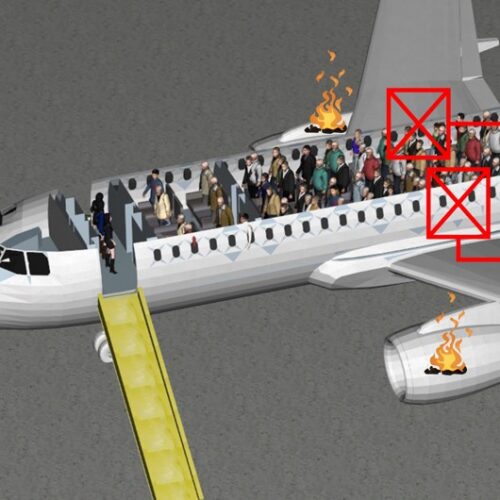
The Federal Aviation Administration (FAA) requires that, in the event of an emergency, all airplane passengers must be able to evacuate any aircraft within a 90-second window. But is that a realistic requirement, particularly given the increasing number of elderly passengers who might need more time and assistance? According to a new paper published in the journal AIP Advances, it is not. Various simulated scenarios showed evacuation times significantly higher than the 90-second requirement. This isn't the first time scientists have puzzled over this kind of optimization problem. Back in 2011, Jason Steffen, now a physicist at the University of Nevada, Las Vegas, became intrigued by the question of the most efficient boarding method; he applied the same optimization routine used to solve the famous traveling salesman problem to airline boarding strategies. Steffen fully expected that boarding from the back to the front would be the most efficient strategy and was surprised when his results showed that strategy was actually the least efficient. The most efficient, aka the “Steffen method,” has the passengers board in a series of waves. Field tests bore out the results, showing that Steffen’s method was almost twice as fast as boarding back-to-front or rotating blocks of rows and 20–30 percent faster than random boarding. The key is parallelism: The ideal scenario is having more than one person sitting down at the same time. Read full article Comments
Stay on the signal
Follow What's the best cabin layout for aircraft evacuation?
Follow this story beyond a single article: new follow-ups, adjacent sources, and the evolving storyline.
Story map
Understand this topic fast
A quick entry into the story: why it matters now, who is involved, and where to go next for context.
Why it matters now
Topic constellation
Open the live map for this story
See which entities, story threads, sources, and follow-up articles shape this story right now.
Click nodes to continue
Entity pages
Story timeline
Continue with this story
A short sequence of events and follow-up stories to understand the arc quickly.
How reliable this looks
Signal and trust for Ars Technica
This source works at a rapid pace: 100% of recent stories land in the hot window, and 0% carry visible search signal.
Reliability
92
Freshness
100
Sources in storyline
1
Related articles
More stories that share tags, source, or category context.

June research roundup: 6 cool science stories we almost missed
Also, the science of poop's distinctive shape, boron buckyballs, and the secret to a soccer feint.
Signal weather
Momentum is building quickly, so this card is a good early entry point into the topic.
Why now
Fresh coverage with immediate momentum.

Reddit will require you to log in to use old.reddit.com
Logged-out Old Reddit access is “significant source of abusive scraping."
Signal weather
Momentum is building quickly, so this card is a good early entry point into the topic.
Why now
Fresh coverage with immediate momentum.
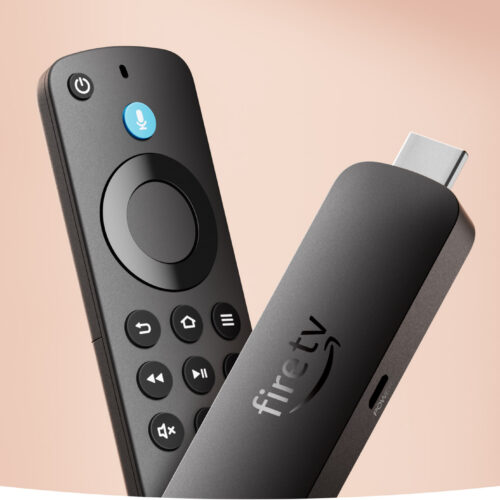
Amazon blames piracy apps with malware for killing new Fire Stick sideloading
New Fire Stick OS helps Amazon block third-party homepage launchers, ad blockers.
Signal weather
Momentum is building quickly, so this card is a good early entry point into the topic.
Why now
Fresh coverage with immediate momentum.
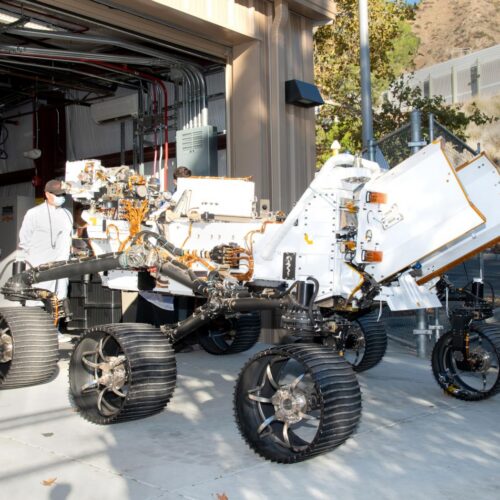
NASA may send a backup, nuclear-powered Mars rover to the Moon
"That would be an awesome capability."
Signal weather
Momentum is building quickly, so this card is a good early entry point into the topic.
Why now
Fresh coverage with immediate momentum.
More from Ars Technica
Fresh reporting and follow-up coverage from the same newsroom.
June research roundup: 6 cool science stories we almost missed
Also, the science of poop's distinctive shape, boron buckyballs, and the secret to a soccer feint.
Signal weather
Momentum is building quickly, so this card is a good early entry point into the topic.
Why now
Fresh coverage with immediate momentum.
Reddit will require you to log in to use old.reddit.com
Logged-out Old Reddit access is “significant source of abusive scraping."
Signal weather
Momentum is building quickly, so this card is a good early entry point into the topic.
Why now
Fresh coverage with immediate momentum.
Amazon blames piracy apps with malware for killing new Fire Stick sideloading
New Fire Stick OS helps Amazon block third-party homepage launchers, ad blockers.
Signal weather
Momentum is building quickly, so this card is a good early entry point into the topic.
Why now
Fresh coverage with immediate momentum.
NASA may send a backup, nuclear-powered Mars rover to the Moon
"That would be an awesome capability."
Signal weather
Momentum is building quickly, so this card is a good early entry point into the topic.
Why now
Fresh coverage with immediate momentum.