Want an oxygen-rich atmosphere? Stuff oxygen’s friends in the mantle.
Getting carbon and sulfur into Earth’s interior may be part of oxygen’s story.
Signal weather
Rising
Momentum is building quickly, so this card is a good early entry point into the topic.

Planet Earth has some pretty great qualities going for it. (Negative reviews mostly revolve around the staff and clientele.) Pretty high on the list of positives is a richly oxygenated atmosphere. But that’s something that evolved and built up over a couple billion years, only eventually resulting in a world conducive to animal life like us. Scientists have many ideas about what could have caused oxygen to increase, and it seems that a number of them are probably correct. No one thing in isolation seems to explain it. Life is part of the story, with photosynthetic life pumping out oxygen. The chemistry of the solid Earth also had a role to play, both through supporting photosynthetic life and through reactions that can shuttle oxygen between the atmosphere and rocks deep inside the Earth. A new study led by Wei Shi of the Chengdu University of Technology suggests that evidence of changes in the subduction of tectonic plates—the process by which they disappear down into Earth’s interior—lines up with the timing of jumps in oxygen levels. Read full article Comments
Stay on the signal
Follow Want an oxygen-rich atmosphere? Stuff oxygen’s friends in the mantle.
Follow this story beyond a single article: new follow-ups, adjacent sources, and the evolving storyline.
Story map
Understand this topic fast
A quick entry into the story: why it matters now, who is involved, and where to go next for context.
Why it matters now
Topic constellation
Open the live map for this story
See which entities, story threads, sources, and follow-up articles shape this story right now.
Click nodes to continue
Entity pages
Story timeline
Continue with this story
A short sequence of events and follow-up stories to understand the arc quickly.
How reliable this looks
Signal and trust for Ars Technica
This source works at a rapid pace: 100% of recent stories land in the hot window, and 0% carry visible search signal.
Reliability
92
Freshness
100
Sources in storyline
1
Related articles
More stories that share tags, source, or category context.

FBI agent explains how easy it is to ID people posting AI porn without consent
A creepy saved post on Instagram linked man to AI porn account, FBI says.
Signal weather
Momentum is building quickly, so this card is a good early entry point into the topic.
Why now
Fresh coverage with immediate momentum.
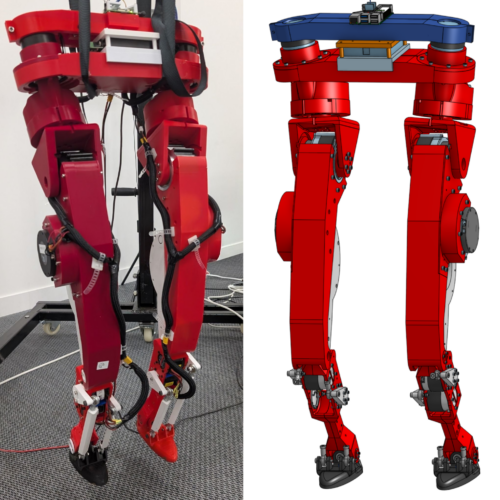
3D-printable humanoid legs let robotics experiments run wild
Hugging Face debuts $2,500 bipedal robot project for builders and researchers.
Signal weather
Momentum is building quickly, so this card is a good early entry point into the topic.
Why now
Fresh coverage with immediate momentum.

Windows' classic 3D Space Cadet pinball is getting a physical re-creation
But there are some real-world constraints that virtual pinball could easily ignore.
Signal weather
Momentum is building quickly, so this card is a good early entry point into the topic.
Why now
Fresh coverage with immediate momentum.

Review: The Boroughs is a smart, pitch-perfect creature feature
Top-notch ensemble cast, smart writing, and an engrossing supernatural mystery make for a winning combo.
Signal weather
Momentum is building quickly, so this card is a good early entry point into the topic.
Why now
Fresh coverage with immediate momentum.
More from Ars Technica
Fresh reporting and follow-up coverage from the same newsroom.
FBI agent explains how easy it is to ID people posting AI porn without consent
A creepy saved post on Instagram linked man to AI porn account, FBI says.
Signal weather
Momentum is building quickly, so this card is a good early entry point into the topic.
Why now
Fresh coverage with immediate momentum.
3D-printable humanoid legs let robotics experiments run wild
Hugging Face debuts $2,500 bipedal robot project for builders and researchers.
Signal weather
Momentum is building quickly, so this card is a good early entry point into the topic.
Why now
Fresh coverage with immediate momentum.
Windows' classic 3D Space Cadet pinball is getting a physical re-creation
But there are some real-world constraints that virtual pinball could easily ignore.
Signal weather
Momentum is building quickly, so this card is a good early entry point into the topic.
Why now
Fresh coverage with immediate momentum.
Review: The Boroughs is a smart, pitch-perfect creature feature
Top-notch ensemble cast, smart writing, and an engrossing supernatural mystery make for a winning combo.
Signal weather
Momentum is building quickly, so this card is a good early entry point into the topic.
Why now
Fresh coverage with immediate momentum.