Three's a party: US, China, and now Russia are on the prowl in GEO
Instead of running silent and deep, most satellites easily stand out against the blackness of space.
Signal weather
Stable
The story has moved beyond the first headline and now acts as a reliable context anchor.
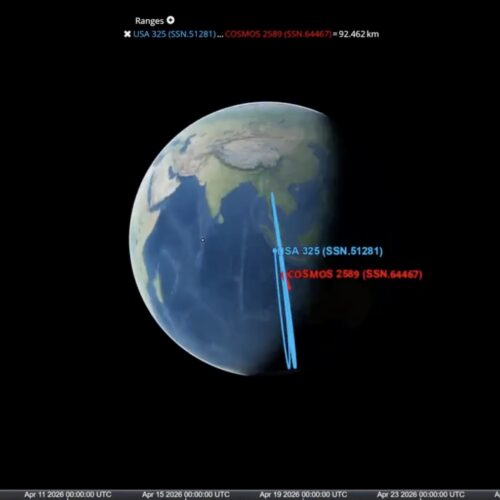
The world's leading space powers desperately want to know what the others are up to high above the equator. For more than a decade, the US military has operated a fleet of "inspector" satellites designed to sidle up to other spacecraft in geosynchronous orbit and take pictures. China started launching its satellites for a similar mission in 2018. Ars has written about these activities in geosynchronous orbit (GEO) before, but the last few months have seen a couple of interesting developments. First, Russia has now joined the fray with the recent arrival of its own suspected inspector (or attack) satellite in GEO. Second, the US Space Force is poised to order more—perhaps many more—reconnaissance satellites of its own to send into the geosynchronous belt. GEO is special. The laws of orbital mechanics mean a satellite in this type of orbit, some 22,000 miles (36,000 kilometers) over the equator, moves around the Earth at the same rate as the planet's rotation, causing it to hover over the same location. Commercial and military-owned geosynchronous satellites typically spend years in the same location, or slot, to provide communications services to users. Read full article Comments
Stay on the signal
Follow Three's a party: US, China, and now Russia are on the prowl in GEO
Follow this story beyond a single article: new follow-ups, adjacent sources, and the evolving storyline.
Story map
Understand this topic fast
A quick entry into the story: why it matters now, who is involved, and where to go next for context.
Why it matters now
Topic constellation
Open the live map for this story
See which entities, story threads, sources, and follow-up articles shape this story right now.
Click nodes to continue
Entity pages
Story timeline
Continue with this story
A short sequence of events and follow-up stories to understand the arc quickly.
How reliable this looks
Signal and trust for Ars Technica
This source works at a rapid pace: 100% of recent stories land in the hot window, and 0% carry visible search signal.
Reliability
92
Freshness
100
Sources in storyline
1
Related articles
More stories that share tags, source, or category context.

Supreme Court ruling guts government’s use of geofence warrants
SCOTUS falls short of deeming geofence warrants unconstitutional, though.
Signal weather
Momentum is building quickly, so this card is a good early entry point into the topic.
Why now
Fresh coverage with immediate momentum.

Sony erases digital content from libraries; we're reminded we don’t own what we buy
Sony has been scaling down its digitial store for a few years.
Signal weather
Momentum is building quickly, so this card is a good early entry point into the topic.
Why now
Fresh coverage with immediate momentum.
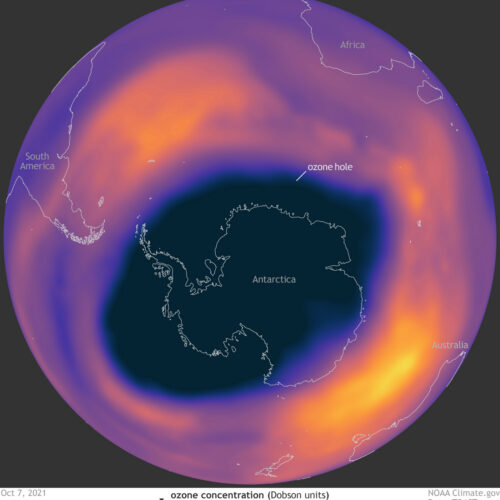
Ozone loss was a thing even before CFCs were widely used
With today’s scientific tools, the problem could have been spotted in the 1950s.
Signal weather
Momentum is building quickly, so this card is a good early entry point into the topic.
Why now
Fresh coverage with immediate momentum.

Google warns EU's plans to weaken its monopoly could expose user data
The EU wants Google to share search data with competitors and open up AI on Android, but Google alleges major privacy risks.
Signal weather
Momentum is building quickly, so this card is a good early entry point into the topic.
Why now
Fresh coverage with immediate momentum.
More from Ars Technica
Fresh reporting and follow-up coverage from the same newsroom.
US offers $10 million for info on group behind Signal and WhatsApp hacking spree
Operation by two Russia-state groups has been ongoing since at least March.
Signal weather
Momentum is building quickly, so this card is a good early entry point into the topic.
Why now
Fresh coverage with immediate momentum.

US renewable boom passes key milestone in April
Small-scale solar helped renewables hit nearly triple coal's generation in the US.
Signal weather
Momentum is building quickly, so this card is a good early entry point into the topic.
Why now
Fresh coverage with immediate momentum.
Supreme Court ruling guts government’s use of geofence warrants
SCOTUS falls short of deeming geofence warrants unconstitutional, though.
Signal weather
Momentum is building quickly, so this card is a good early entry point into the topic.
Why now
Fresh coverage with immediate momentum.
Sony erases digital content from libraries; we're reminded we don’t own what we buy
Sony has been scaling down its digitial store for a few years.
Signal weather
Momentum is building quickly, so this card is a good early entry point into the topic.
Why now
Fresh coverage with immediate momentum.