The debut of Gemini 3.1 Flash Live could make it harder to know if you're talking to a robot
Google's new conversational audio AI is rolling out in search, Gemini, and developer tools today.
Signal weather
Stable
The story has moved beyond the first headline and now acts as a reliable context anchor.

Text generated by artificial intelligence often has a particular vibe that gives it away as machine-generated, but it has become harder to pick out those idiosyncrasies as the tech has improved. We may be seeing a similar evolution of generative AI audio. Google has announced a new AI audio model called Gemini 3.1 Flash Live—as the name implies, it's designed for real-time conversation. It's rolling out in some Google products starting today, and developers will be able to start building their own chatty robots with the model, too. Google says this AI is much faster and produces speech with a more natural cadence, aiming to solve a long-running issue with AI-generated speech. Like a chatbot, there's always a delay between input and output in generative audio systems. Longer delays and unnatural inflection make conversations feel sluggish and harder to follow. Researchers generally believe 300 milliseconds of latency is about the limit for optimal speech perception, but Google has not specified any particular delay for Gemini 3.1 Flash Live. It just vaguely has the speed you need. But benchmark numbers? Google has plenty of those, which it claims show that 3.1 Flash Live will be a more reliable way to have audio-to-audio AI conversations. For example, a big gain in the ComplexFuncBench Audio shows the new model is better at complex, multi-step tasks. Gemini 3.1 Flash Live also tops the charts in the Big Bench Audio test, which evaluates reasoning with a set of 1,000 audio questions. Read full article Comments
Stay on the signal
Follow The debut of Gemini 3.1 Flash Live could make it harder to know if you're talking to a robot
Follow this story beyond a single article: new follow-ups, adjacent sources, and the evolving storyline.
Story map
Understand this topic fast
A quick entry into the story: why it matters now, who is involved, and where to go next for context.
Why it matters now
Topic constellation
Open the live map for this story
See which entities, story threads, sources, and follow-up articles shape this story right now.
Click nodes to continue
Entity pages
Story threads
Story timeline
Continue with this story
A short sequence of events and follow-up stories to understand the arc quickly.
How reliable this looks
Signal and trust for Ars Technica
This source works at a rapid pace: 100% of recent stories land in the hot window, and 0% carry visible search signal.
Reliability
92
Freshness
100
Sources in storyline
2
Related articles
More stories that share tags, source, or category context.
Show HN: I made Google Trends for Hacker News by indexing 18 years of comments
Comments
Signal weather
Momentum is building quickly, so this card is a good early entry point into the topic.
Why now
Fresh coverage with immediate momentum.

The "sad inevitability" of Europe's heat wave
Europeans are baking under their second heat wave of the summer.
Signal weather
Momentum is building quickly, so this card is a good early entry point into the topic.
Why now
Fresh coverage with immediate momentum.

New effort will get genome sequences for entire Endangered Species list
Colossal Biosciences will be biobanking tissues from all of them as well.
Signal weather
Momentum is building quickly, so this card is a good early entry point into the topic.
Why now
Fresh coverage with immediate momentum.
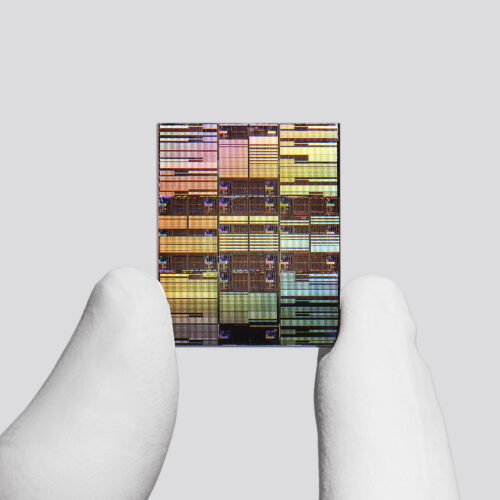
IBM claims world’s first sub-1 nanometer chip technology
IBM’s nanostack transistors could boost chip performance or energy efficiency.
Signal weather
Momentum is building quickly, so this card is a good early entry point into the topic.
Why now
Fresh coverage with immediate momentum.
More from Ars Technica
Fresh reporting and follow-up coverage from the same newsroom.
The "sad inevitability" of Europe's heat wave
Europeans are baking under their second heat wave of the summer.
Signal weather
Momentum is building quickly, so this card is a good early entry point into the topic.
Why now
Fresh coverage with immediate momentum.
New effort will get genome sequences for entire Endangered Species list
Colossal Biosciences will be biobanking tissues from all of them as well.
Signal weather
Momentum is building quickly, so this card is a good early entry point into the topic.
Why now
Fresh coverage with immediate momentum.

Every Homo naledi we know of is female, and the implications are fascinating
"There is no natural explanation," says paleoanthropologist John Hawks.
Signal weather
Momentum is building quickly, so this card is a good early entry point into the topic.
Why now
Fresh coverage with immediate momentum.
IBM claims world’s first sub-1 nanometer chip technology
IBM’s nanostack transistors could boost chip performance or energy efficiency.
Signal weather
Momentum is building quickly, so this card is a good early entry point into the topic.
Why now
Fresh coverage with immediate momentum.