So long, farewell: Saying goodbye to Audi's best car, the 2026 RS6 Avant
With production now finished, we take one last ride in our favorite station wagon.
Signal weather
Stable
The story has moved beyond the first headline and now acts as a reliable context anchor.
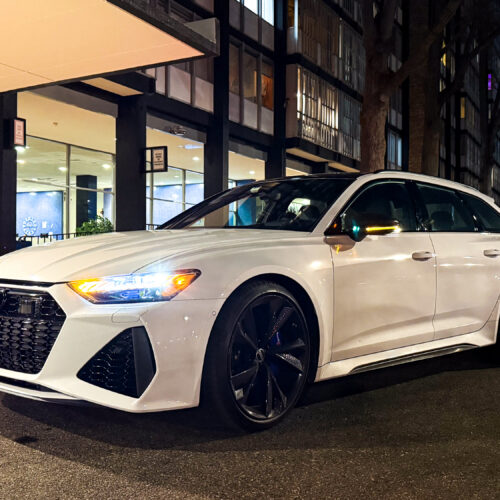
By the time you read this, the Audi RS6 Avant is dead. Production at the factory in Neckarsulm, Germany, has already switched over to new models; any unsold wagons at dealerships will be the last of their kind. Time moves on, leaving the unelectrified 2026 RS6 Avant Performance as a relic from a bygone age where people didn't care quite so much about melting glaciers. In this regard progress is good and climate catastrophe is bad, but there are other things to like about the RS6 Avant, and much that Audi could and should bring to its other cars. The car was always something of a unicorn here in the US. As the SUV became ascendant, the station wagon suffered a corresponding decline with the general public, and automakers like Audi responded by not importing them anymore. The economics, we were told, didn't add up: wagon sales would just cannibalize SUV sales but at too small a rate to make the imported wagons profitable. But with smaller volumes, the math made more sense, which is why in 2019 the car maker buckled to pressure and said fine, we'll import the RS6 Avant. And with a starting price of $130,700, you can understand why this is a low-volume model. Subtly swollen A look down its flanks reveals wheel arches that bulge to accommodate larger wheels, part of Audi Sport's RS transformation applied to the sedate A6 starting point. Larger wheels provide clearance for larger brakes, which in turn help stop it from prodigious velocities—if you have a long enough runway or the right stretch of German Autobahn, top speed for this version, the Performance, tops out at 190 mph (305 km/h). Under the hood, hidden from view by plastic paneling, lies a twin-turbocharged 4.0 L V8 engine, which generates 621 hp (463 kW) and 627 lb-ft (850 Nm), sending power to all four wheels via an eight-speed ZF automatic transmission. Read full article Comments
Stay on the signal
Follow So long, farewell: Saying goodbye to Audi's best car, the 2026 RS6 Avant
Follow this story beyond a single article: new follow-ups, adjacent sources, and the evolving storyline.
Story map
Understand this topic fast
A quick entry into the story: why it matters now, who is involved, and where to go next for context.
Why it matters now
Topic constellation
Open the live map for this story
See which entities, story threads, sources, and follow-up articles shape this story right now.
Click nodes to continue
Entity pages
Story timeline
Continue with this story
A short sequence of events and follow-up stories to understand the arc quickly.
How reliable this looks
Signal and trust for Ars Technica
This source works at a rapid pace: 100% of recent stories land in the hot window, and 0% carry visible search signal.
Reliability
92
Freshness
100
Sources in storyline
1
Related articles
More stories that share tags, source, or category context.
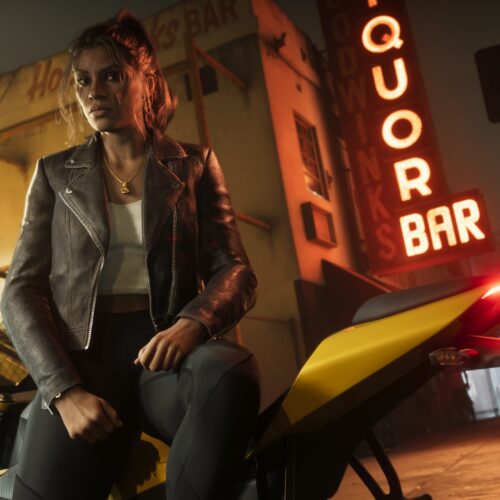
Hotly anticipated Grand Theft Auto VI will cost more than other AAA games
GTA6 might be an outlier, though—at least for now.
Signal weather
Momentum is building quickly, so this card is a good early entry point into the topic.
Why now
Fresh coverage with immediate momentum.

OpenAI and Broadcom announce chip designed for LLM inference at scale
The silicon race is heating up amid the struggle to keep up with demand.
Signal weather
Momentum is building quickly, so this card is a good early entry point into the topic.
Why now
Fresh coverage with immediate momentum.
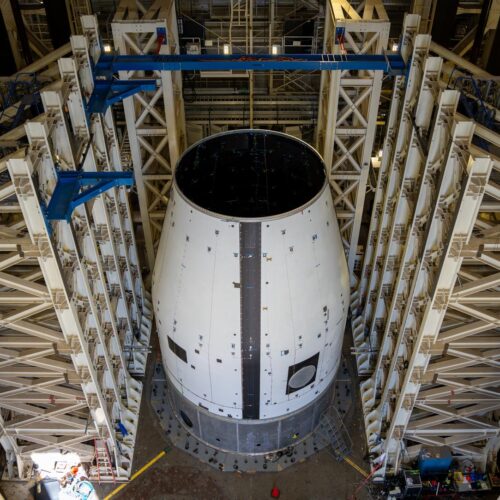
13 years and $500 million for a stage adapter? Report justifies NASA cancellations.
"Contract values for these efforts ballooned from nearly $2.8 billion to $5.9 billion."
Signal weather
Momentum is building quickly, so this card is a good early entry point into the topic.
Why now
Fresh coverage with immediate momentum.
US ends hantavirus outbreak response with no answers on draconian quarantines
We still don't know why RFK Jr. overruled CDC expert to order strict quarantines.
Signal weather
Momentum is building quickly, so this card is a good early entry point into the topic.
Why now
Fresh coverage with immediate momentum.
More from Ars Technica
Fresh reporting and follow-up coverage from the same newsroom.
Hotly anticipated Grand Theft Auto VI will cost more than other AAA games
GTA6 might be an outlier, though—at least for now.
Signal weather
Momentum is building quickly, so this card is a good early entry point into the topic.
Why now
Fresh coverage with immediate momentum.
OpenAI and Broadcom announce chip designed for LLM inference at scale
The silicon race is heating up amid the struggle to keep up with demand.
Signal weather
Momentum is building quickly, so this card is a good early entry point into the topic.
Why now
Fresh coverage with immediate momentum.
13 years and $500 million for a stage adapter? Report justifies NASA cancellations.
"Contract values for these efforts ballooned from nearly $2.8 billion to $5.9 billion."
Signal weather
Momentum is building quickly, so this card is a good early entry point into the topic.
Why now
Fresh coverage with immediate momentum.
US ends hantavirus outbreak response with no answers on draconian quarantines
We still don't know why RFK Jr. overruled CDC expert to order strict quarantines.
Signal weather
Momentum is building quickly, so this card is a good early entry point into the topic.
Why now
Fresh coverage with immediate momentum.