Pompeii victim ID'd as a likely doctor
New X-rays and CT scans showed small case with locking mechanism containing metal instruments.
Signal weather
Stable
The story has moved beyond the first headline and now acts as a reliable context anchor.
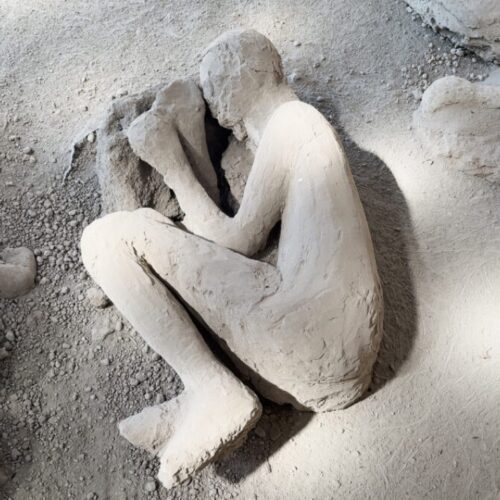
Archaeologists used a combination of advanced CT scans and 3D digital reconstruction to identify one of the Pompeii victims who died in 79 CE during the eruption of Mount Vesuvius as most likely having been a Roman doctor, according to an announcement by the Pompeii Archaeological Park. As previously reported, the eruption of Mount Vesuvius released thermal energy roughly equivalent to 100,000 times the atomic bombs dropped on Hiroshima and Nagasaki at the end of World War II, spewing molten rock, pumice, and hot ash over the cities of Pompeii and Herculaneum in particular. The vast majority of people in Pompeii and Herculaneum—the cities hardest hit—perished from asphyxiation, choking on the thick clouds of noxious gas and ash. But at least some of the Vesuvian victims probably died instantaneously from the intense heat of fast-moving pyroclastic flows, with temperatures high enough to boil brains and explode skulls. In the 19th century, an archaeologist named Giuseppe Fiorelli figured out how to make casts of those frozen bodies by pouring liquid plaster into the voids where the soft tissue had been. Some 1,000 bodies have been discovered in the ruins, and 104 plaster casts have been preserved. Restoration efforts on 86 of those casts began about 10 years ago, during which researchers took CT scans and X-rays to determine whether complete skeletons were present. Read full article Comments
Stay on the signal
Follow Pompeii victim ID'd as a likely doctor
Follow this story beyond a single article: new follow-ups, adjacent sources, and the evolving storyline.
Story map
Understand this topic fast
A quick entry into the story: why it matters now, who is involved, and where to go next for context.
Why it matters now
Topic constellation
Open the live map for this story
See which entities, story threads, sources, and follow-up articles shape this story right now.
Click nodes to continue
Entity pages
Story threads
Story timeline
Continue with this story
A short sequence of events and follow-up stories to understand the arc quickly.
How reliable this looks
Signal and trust for Ars Technica
This source works at a rapid pace: 100% of recent stories land in the hot window, and 0% carry visible search signal.
Reliability
92
Freshness
100
Sources in storyline
1
Related articles
More stories that share tags, source, or category context.

Newly discovered PamStealer isn't your typical macOS malware
The discovery underscores the increased effort being poured into Mac infostealers.
Signal weather
Momentum is building quickly, so this card is a good early entry point into the topic.
Why now
Fresh coverage with immediate momentum.
FAA proposal: Supersonic airliners can fly over US cities if they’re quiet
New US rules would legalize quiet supersonic flights without the sonic boom.
Signal weather
Momentum is building quickly, so this card is a good early entry point into the topic.
Why now
Fresh coverage with immediate momentum.

Ars Live recap: When are the big rockets NASA desperately needs going to be ready?
I have not seen anyone put out a date for a new rocket, and actually hit it.
Signal weather
Momentum is building quickly, so this card is a good early entry point into the topic.
Why now
Fresh coverage with immediate momentum.

Plex debuts 5-year membership pass for $250
Plex is pushing customers to newer features and more frequent payments.
Signal weather
Momentum is building quickly, so this card is a good early entry point into the topic.
Why now
Fresh coverage with immediate momentum.
More from Ars Technica
Fresh reporting and follow-up coverage from the same newsroom.
Newly discovered PamStealer isn't your typical macOS malware
The discovery underscores the increased effort being poured into Mac infostealers.
Signal weather
Momentum is building quickly, so this card is a good early entry point into the topic.
Why now
Fresh coverage with immediate momentum.
FAA proposal: Supersonic airliners can fly over US cities if they’re quiet
New US rules would legalize quiet supersonic flights without the sonic boom.
Signal weather
Momentum is building quickly, so this card is a good early entry point into the topic.
Why now
Fresh coverage with immediate momentum.
Ars Live recap: When are the big rockets NASA desperately needs going to be ready?
I have not seen anyone put out a date for a new rocket, and actually hit it.
Signal weather
Momentum is building quickly, so this card is a good early entry point into the topic.
Why now
Fresh coverage with immediate momentum.
Plex debuts 5-year membership pass for $250
Plex is pushing customers to newer features and more frequent payments.
Signal weather
Momentum is building quickly, so this card is a good early entry point into the topic.
Why now
Fresh coverage with immediate momentum.