Ozone loss was a thing even before CFCs were widely used
With today’s scientific tools, the problem could have been spotted in the 1950s.
Signal weather
Rising
Momentum is building quickly, so this card is a good early entry point into the topic.
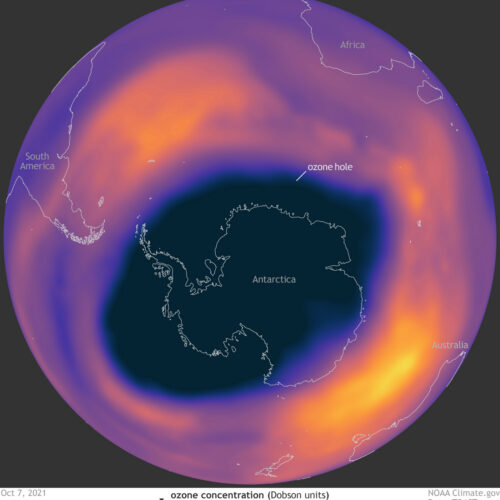
The ban on ozone-depleting substances that successfully reversed the growth of the hole in the ozone layer isn’t seen as a missed opportunity. On the contrary, the quick global response is one of the best cases of common-sense environmental action. But what if it could have been done even earlier? The fact that chlorofluorocarbons (CFCs)—chemicals once common in aerosol cans and refrigerant loops—could destroy ozone in the atmosphere was discovered in 1974. Within just a few years, bans on CFCs began to roll out based on the projected consequences. The seasonal ozone “hole” discovered over Antarctica in 1985 pushed things along even faster, and in 1987 an international agreement was signed to phase out CFCs everywhere. A new study led by Jian Guan at MIT asks an interesting what-if question: Would it have been possible to detect this problem even sooner with today’s scientific tools? Read full article Comments
Stay on the signal
Follow Ozone loss was a thing even before CFCs were widely used
Follow this story beyond a single article: new follow-ups, adjacent sources, and the evolving storyline.
Story map
Understand this topic fast
A quick entry into the story: why it matters now, who is involved, and where to go next for context.
Why it matters now
Topic constellation
Open the live map for this story
See which entities, story threads, sources, and follow-up articles shape this story right now.
Click nodes to continue
Story timeline
Continue with this story
A short sequence of events and follow-up stories to understand the arc quickly.
How reliable this looks
Signal and trust for Ars Technica
This source works at a rapid pace: 100% of recent stories land in the hot window, and 0% carry visible search signal.
Reliability
92
Freshness
100
Sources in storyline
1
Related articles
More stories that share tags, source, or category context.
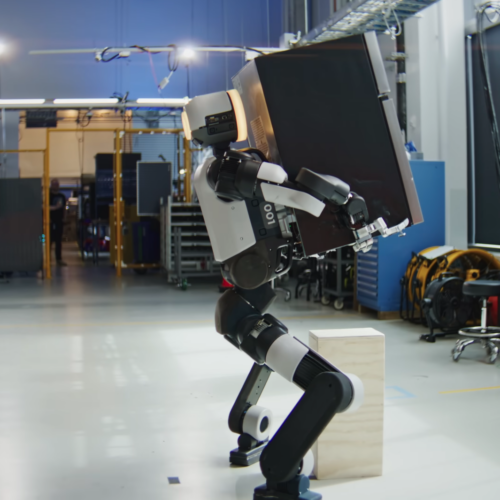
South Korea to spend $1T on more memory chip production and humanoid robots
South Korea targets physical AI lead and commercial humanoid robots by 2028.
Signal weather
Momentum is building quickly, so this card is a good early entry point into the topic.
Why now
Fresh coverage with immediate momentum.

US renewable boom passes key milestone in April
Small-scale solar helped renewables nearly triple coal generation on the US grid.
Signal weather
Momentum is building quickly, so this card is a good early entry point into the topic.
Why now
Fresh coverage with immediate momentum.

Supreme Court ruling guts government’s use of geofence warrants
SCOTUS falls short of deeming geofence warrants unconstitutional, though.
Signal weather
Momentum is building quickly, so this card is a good early entry point into the topic.
Why now
Fresh coverage with immediate momentum.

Sony erases digital content from libraries; we're reminded we don’t own what we buy
Sony has been scaling down its digitial store for a few years.
Signal weather
Momentum is building quickly, so this card is a good early entry point into the topic.
Why now
Fresh coverage with immediate momentum.
More from Ars Technica
Fresh reporting and follow-up coverage from the same newsroom.
South Korea to spend $1T on more memory chip production and humanoid robots
South Korea targets physical AI lead and commercial humanoid robots by 2028.
Signal weather
Momentum is building quickly, so this card is a good early entry point into the topic.
Why now
Fresh coverage with immediate momentum.
US renewable boom passes key milestone in April
Small-scale solar helped renewables nearly triple coal generation on the US grid.
Signal weather
Momentum is building quickly, so this card is a good early entry point into the topic.
Why now
Fresh coverage with immediate momentum.
Supreme Court ruling guts government’s use of geofence warrants
SCOTUS falls short of deeming geofence warrants unconstitutional, though.
Signal weather
Momentum is building quickly, so this card is a good early entry point into the topic.
Why now
Fresh coverage with immediate momentum.
Sony erases digital content from libraries; we're reminded we don’t own what we buy
Sony has been scaling down its digitial store for a few years.
Signal weather
Momentum is building quickly, so this card is a good early entry point into the topic.
Why now
Fresh coverage with immediate momentum.