New 3D map of Universe could solve dark energy mystery
Latest data must still be analyzed but could help determine if dark energy is constant or varies over time.
Signal weather
Stable
The story has moved beyond the first headline and now acts as a reliable context anchor.

Visualization shows how DESI built its 3D map of the Universe. Earth is at the center of the wedges, and every point is a galaxy. Credit: DESI/KPNO/NOIRLab/NSF/AURA/R. Proctor In a significant milestone, the Dark Energy Spectroscopic Instrument (DESI) has completed its 3D map of the Universe—the highest resolution of any such map yet achieved—on schedule and with more data than expected, the collaboration announced today. Analyses of DESI data from earlier runs have already produced exciting hints of new physics—namely that the Universe's dark energy, rather than being constant, might vary over time. The latest data must still be analyzed but could help definitively confirm or disprove those hints within the next couple of years. "DESI's five-year survey has been spectacularly successful," DESI director Michael Levi of Berkeley Lab said. "The instrument performed better than anticipated. The results have been incredibly exciting. And the size and scope of the map and how quickly we've been able to execute is phenomenal. We're going to celebrate completion of the original survey and then get started on the work of churning through the data, because we're all curious about what new surprises are waiting for us." As previously reported, Albert Einstein’s cosmological constant (lambda) implied the existence of a repulsive form of gravity. (For a more in-depth discussion of the history of the cosmological constant and its significance for dark energy, see our 2024 story.) Quantum physics holds that even the emptiest vacuum is teeming with energy in the form of “virtual” particles that wink in and out of existence, flying apart and coming together in an intricate quantum dance. This roiling sea of virtual particles could give rise to dark energy, giving the Universe a little extra push so that it can continue accelerating. The problem is that the quantum vacuum contains too much energy: roughly 10120 times too much. Read full article Comments
Stay on the signal
Follow New 3D map of Universe could solve dark energy mystery
Follow this story beyond a single article: new follow-ups, adjacent sources, and the evolving storyline.
Story map
Understand this topic fast
A quick entry into the story: why it matters now, who is involved, and where to go next for context.
Why it matters now
Topic constellation
Open the live map for this story
See which entities, story threads, sources, and follow-up articles shape this story right now.
Click nodes to continue
Story timeline
Continue with this story
A short sequence of events and follow-up stories to understand the arc quickly.
How reliable this looks
Signal and trust for Ars Technica
This source works at a rapid pace: 100% of recent stories land in the hot window, and 0% carry visible search signal.
Reliability
92
Freshness
100
Sources in storyline
1
Related articles
More stories that share tags, source, or category context.

School shooting survivor sues AI gun detection firm after system failed to spot weapon
How accurate does an AI system need to be?
Signal weather
Momentum is building quickly, so this card is a good early entry point into the topic.
Why now
Fresh coverage with immediate momentum.

Some ancient microbes frozen with Ötzi the Iceman are still growing
What’s the difference between a person, an artifact, and an ecosystem?
Signal weather
Momentum is building quickly, so this card is a good early entry point into the topic.
Why now
Fresh coverage with immediate momentum.

Baby botulism outbreak: FDA still doesn't know cause—or how to prevent it
In the end, the three companies involved all point the finger at each other.
Signal weather
Momentum is building quickly, so this card is a good early entry point into the topic.
Why now
Fresh coverage with immediate momentum.
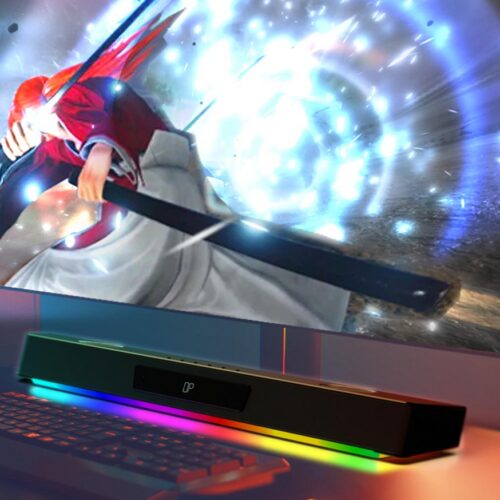
How a USB-connected speaker can infect a PC without ever being touched
Seller of the Sound Blaster Katana V2X doesn't consider the behavior a vulnerability.
Signal weather
Momentum is building quickly, so this card is a good early entry point into the topic.
Why now
Fresh coverage with immediate momentum.
More from Ars Technica
Fresh reporting and follow-up coverage from the same newsroom.
School shooting survivor sues AI gun detection firm after system failed to spot weapon
How accurate does an AI system need to be?
Signal weather
Momentum is building quickly, so this card is a good early entry point into the topic.
Why now
Fresh coverage with immediate momentum.

Scientists ejected from diabetes conference for distributing journal reprints
Those ousted included ADA journal editor-in-chief Steven Kahn and former ADA president Desmond Schatz
Signal weather
Momentum is building quickly, so this card is a good early entry point into the topic.
Why now
Fresh coverage with immediate momentum.
Some ancient microbes frozen with Ötzi the Iceman are still growing
What’s the difference between a person, an artifact, and an ecosystem?
Signal weather
Momentum is building quickly, so this card is a good early entry point into the topic.
Why now
Fresh coverage with immediate momentum.
Baby botulism outbreak: FDA still doesn't know cause—or how to prevent it
In the end, the three companies involved all point the finger at each other.
Signal weather
Momentum is building quickly, so this card is a good early entry point into the topic.
Why now
Fresh coverage with immediate momentum.