Neanderthal brains measure up to ours—literally
The differences between our brains and Neanderthals' were likely cosmetic.
Signal weather
Stable
The story has moved beyond the first headline and now acts as a reliable context anchor.
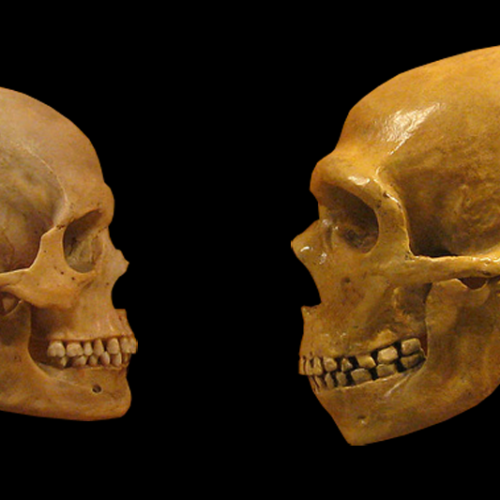
If you look at a Neanderthal skull and a Homo sapiens skull, they're visibly different: Neanderthal skulls are lower and longer, whereas ours tend to be rounder. However, those differences probably don’t say much about the brains within them, according to a recent study, which compared MRI scans of modern people’s brains with casts of the inside of Neanderthal skulls. The results suggest that there’s more variation in brain size among modern people than between Neanderthals and Pleistocene Homo sapiens. And because brain size is actually a terrible way to predict cognitive capability, Neanderthals could have been a lot more like us than some previous studies have claimed, which definitely fits what the archaeological record tells us about how they lived. It would also mean that our species probably didn't out-compete the Neanderthals by being smarter or more adaptable. Neanderthal brains fit within the modern human range Years after you die, the inner vault of your skull will hold the shape of your brain; if future archaeologists make a cast of that inner space, they’ll get a neat resin model of the outer contours of your brain, called an endocast. (Sediment that filled the skull of an Australopithecus africanus child who died 2.8 million years ago did this naturally, creating an endocast that’s half rocky brain-sculpture and half sparkling crystal.) For years, researchers have studied endocasts of Neanderthal skulls, trying to piece together how their brains were different or similar to ours. And that has been a matter of some debate. Read full article Comments
Stay on the signal
Follow Neanderthal brains measure up to ours—literally
Follow this story beyond a single article: new follow-ups, adjacent sources, and the evolving storyline.
Story map
Understand this topic fast
A quick entry into the story: why it matters now, who is involved, and where to go next for context.
Why it matters now
Topic constellation
Open the live map for this story
See which entities, story threads, sources, and follow-up articles shape this story right now.
Click nodes to continue
Entity pages
Story timeline
Continue with this story
A short sequence of events and follow-up stories to understand the arc quickly.
How reliable this looks
Signal and trust for Ars Technica
This source works at a rapid pace: 100% of recent stories land in the hot window, and 0% carry visible search signal.
Reliability
92
Freshness
100
Sources in storyline
1
Related articles
More stories that share tags, source, or category context.

Trump admin tries to block Clean Air Act lawsuit over xAI's gas turbines
NAACP lawsuit says xAI uses gas turbines without permits for Grok data center.
Signal weather
Momentum is building quickly, so this card is a good early entry point into the topic.
Why now
Fresh coverage with immediate momentum.
Year of free HPE software a “step in the correct direction” in VMware rivalry
Partner tells Ars that HPE should be giving out more free VM Essentials licenses.
Signal weather
Momentum is building quickly, so this card is a good early entry point into the topic.
Why now
Fresh coverage with immediate momentum.

Cockroaches scurry around with thousands of pieces of bacterial genomes
Transferring genes across species doesn't just happen in microbes.
Signal weather
Momentum is building quickly, so this card is a good early entry point into the topic.
Why now
Fresh coverage with immediate momentum.
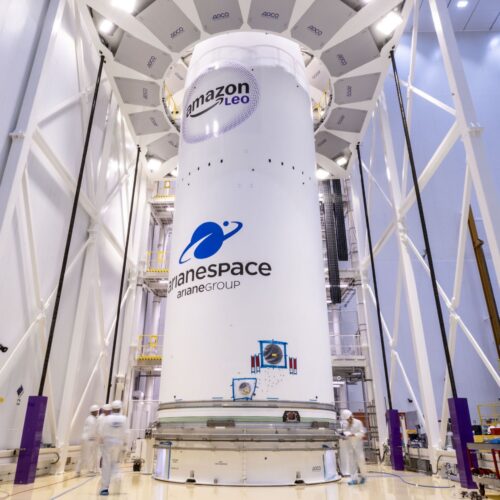
Among the large new rockets Amazon was counting on, only Europe has delivered
"As for Arianespace, they have definitely stepped up."
Signal weather
Momentum is building quickly, so this card is a good early entry point into the topic.
Why now
Fresh coverage with immediate momentum.
More from Ars Technica
Fresh reporting and follow-up coverage from the same newsroom.
Trump admin tries to block Clean Air Act lawsuit over xAI's gas turbines
NAACP lawsuit says xAI uses gas turbines without permits for Grok data center.
Signal weather
Momentum is building quickly, so this card is a good early entry point into the topic.
Why now
Fresh coverage with immediate momentum.
Year of free HPE software a “step in the correct direction” in VMware rivalry
Partner tells Ars that HPE should be giving out more free VM Essentials licenses.
Signal weather
Momentum is building quickly, so this card is a good early entry point into the topic.
Why now
Fresh coverage with immediate momentum.
Cockroaches scurry around with thousands of pieces of bacterial genomes
Transferring genes across species doesn't just happen in microbes.
Signal weather
Momentum is building quickly, so this card is a good early entry point into the topic.
Why now
Fresh coverage with immediate momentum.
Among the large new rockets Amazon was counting on, only Europe has delivered
"As for Arianespace, they have definitely stepped up."
Signal weather
Momentum is building quickly, so this card is a good early entry point into the topic.
Why now
Fresh coverage with immediate momentum.