Motorola suddenly raises budget phone prices up to 50%—you can probably thank AI
Motorola's budget phones are much less budget-friendly today.
Signal weather
Stable
The story has moved beyond the first headline and now acts as a reliable context anchor.

Motorola announced a new mid-range phone yesterday, the 2026 Moto G Stylus. It's not exactly a game changer unless you demand a stylus with your smartphone. Despite little in the way of upgrades, the new G Stylus will debut at $500, which is $100 more than last year's version. It's now clear that higher pricing will be a trend in Moto's lineup. Without so much as a peep, Motorola has enacted price increases of up to 50 percent on the rest of its 2026 Moto G lineup. Prior to the G Stylus announcement, Moto had three 2026 G-series phones—the Moto G Play, Moto G, and Moto G Power. They used to sell for $180, $200, and $300, respectively. In the past day, the Moto G Play rose to $250, which is a 38 percent increase. The 2026 Moto G went to $300—a whopping 50 percent price bump. Finally, the top model in Moto's budget lineup, the Moto G Power, is now $400. That's a 33 percent jump, putting it close to Samsung's latest mid-range phones and $100 shy of the new Moto G Stylus. Seeing a higher price tag on the new Moto G Stylus wasn't a surprise given current hardware conditions, and the phone does have a few small upgrades. The battery capacity is slightly larger, and the stylus has basic pressure sensitivity support now. However, that hardly justifies a $100 increase over last year's model, which had the same display and memory. It makes more sense in the context of an across-the-board price increase for Moto's budget lineup. Read full article Comments
Stay on the signal
Follow Motorola suddenly raises budget phone prices up to 50%—you can probably thank AI
Follow this story beyond a single article: new follow-ups, adjacent sources, and the evolving storyline.
Story map
Understand this topic fast
A quick entry into the story: why it matters now, who is involved, and where to go next for context.
Why it matters now
Topic constellation
Open the live map for this story
See which entities, story threads, sources, and follow-up articles shape this story right now.
Click nodes to continue
Entity pages
Story timeline
Continue with this story
A short sequence of events and follow-up stories to understand the arc quickly.
How reliable this looks
Signal and trust for Ars Technica
This source works at a rapid pace: 100% of recent stories land in the hot window, and 0% carry visible search signal.
Reliability
92
Freshness
100
Sources in storyline
2
Related articles
More stories that share tags, source, or category context.
Uber blows through its AI budget in 1 quarter
Comments
Signal weather
Momentum is building quickly, so this card is a good early entry point into the topic.
Why now
Fresh coverage with immediate momentum.

Is Peter Thiel the target of Pope Leo's Gandalf quote? An investigation.
Parsing a papal proclamation.
Signal weather
Momentum is building quickly, so this card is a good early entry point into the topic.
Why now
Fresh coverage with immediate momentum.
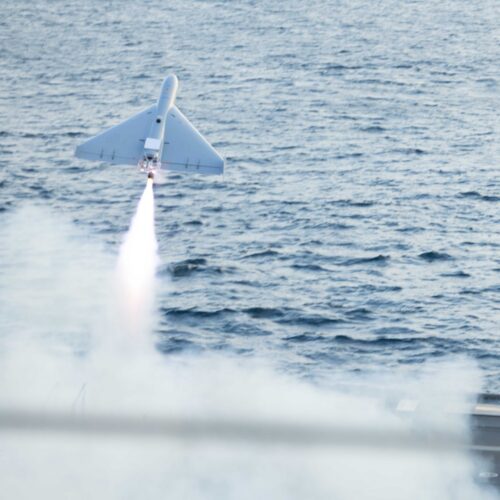
Musk says US military suicide drones used Starlink in violation of SpaceX rules
Musk says drones used Starlink instead of Starshield, blames military contractor.
Signal weather
Momentum is building quickly, so this card is a good early entry point into the topic.
Why now
Fresh coverage with immediate momentum.
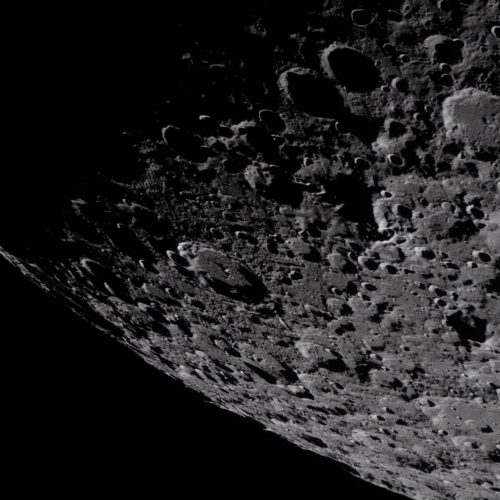
NASA takes steps toward building Moon Base, including discussing a "perimeter"
"We also obviously want to be very mindful of the Outer Space Treaty."
Signal weather
Momentum is building quickly, so this card is a good early entry point into the topic.
Why now
Fresh coverage with immediate momentum.
More from Ars Technica
Fresh reporting and follow-up coverage from the same newsroom.
Is Peter Thiel the target of Pope Leo's Gandalf quote? An investigation.
Parsing a papal proclamation.
Signal weather
Momentum is building quickly, so this card is a good early entry point into the topic.
Why now
Fresh coverage with immediate momentum.
Musk says US military suicide drones used Starlink in violation of SpaceX rules
Musk says drones used Starlink instead of Starshield, blames military contractor.
Signal weather
Momentum is building quickly, so this card is a good early entry point into the topic.
Why now
Fresh coverage with immediate momentum.
NASA takes steps toward building Moon Base, including discussing a "perimeter"
"We also obviously want to be very mindful of the Outer Space Treaty."
Signal weather
Momentum is building quickly, so this card is a good early entry point into the topic.
Why now
Fresh coverage with immediate momentum.

We're starting to see some PC makers respond to Apple's MacBook Neo
Sub-$600 laptops have existed for years, but consistently good ones remain rare.
Signal weather
Momentum is building quickly, so this card is a good early entry point into the topic.
Why now
Fresh coverage with immediate momentum.