Google's TurboQuant AI-compression algorithm can reduce LLM memory usage by 6x
TurboQuant makes AI models more efficient but doesn't reduce output quality like other methods.
Signal weather
Stable
The story has moved beyond the first headline and now acts as a reliable context anchor.
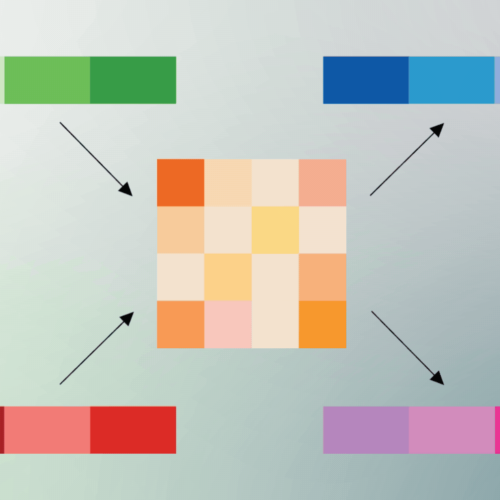
Even if you don't know much about the inner workings of generative AI models, you probably know they need a lot of memory. Hence, it is currently almost impossible to buy a measly stick of RAM without getting fleeced. Google Research recently revealed TurboQuant, a compression algorithm that reduces the memory footprint of large language models (LLMs) while also boosting speed and maintaining accuracy. TurboQuant is aimed at reducing the size of the key-value cache, which Google likens to a "digital cheat sheet" that stores important information so it doesn't have to be recomputed. This cheat sheet is necessary because, as we say all the time, LLMs don't actually know anything; they can do a good impression of knowing things through the use of vectors, which map the semantic meaning of tokenized text. When two vectors are similar, that means they have conceptual similarity. High-dimensional vectors, which can have hundreds or thousands of embeddings, may describe complex information like the pixels in an image or a large data set. They also occupy a lot of memory and inflate the size of the key-value cache, bottlenecking performance. To make models smaller and more efficient, developers employ quantization techniques to run them at lower precision. The drawback is that the outputs get worse—the quality of token estimation goes down. With TurboQuant, Google's early results show an 8x performance increase and 6x reduction in memory usage in some tests without a loss of quality. Read full article Comments
Stay on the signal
Follow Google's TurboQuant AI-compression algorithm can reduce LLM memory usage by 6x
Follow this story beyond a single article: new follow-ups, adjacent sources, and the evolving storyline.
Story map
Understand this topic fast
A quick entry into the story: why it matters now, who is involved, and where to go next for context.
Why it matters now
Topic constellation
Open the live map for this story
See which entities, story threads, sources, and follow-up articles shape this story right now.
Click nodes to continue
Entity pages
Story timeline
Continue with this story
A short sequence of events and follow-up stories to understand the arc quickly.
How reliable this looks
Signal and trust for Ars Technica
This source works at a rapid pace: 100% of recent stories land in the hot window, and 0% carry visible search signal.
Reliability
92
Freshness
100
Sources in storyline
3
Related articles
More stories that share tags, source, or category context.
«Примите куки, ну пожалуйста». Бесконечный сериал продлили. Спасибо Google, Парижу и Берлину
Google, Франция и Германия похоронили статью 88b, которая могла избавить от надоедливых окон.
Signal weather
Momentum is building quickly, so this card is a good early entry point into the topic.
Why now
Fresh coverage with immediate momentum.
OpenAI and Broadcom unveil LLM-optimized inference chip
OpenAI and Broadcom introduce Jalapeño, a custom AI chip built for LLM inference to improve performance, efficiency, and scale across AI systems.
Signal weather
Momentum is building quickly, so this card is a good early entry point into the topic.
Why now
Fresh coverage with immediate momentum.

White House drastically shortens deadline for dropping quantum-vulnerable crypto
Order warns of national security risks if post-quantum cryptography isn't adopted in time.
Signal weather
Momentum is building quickly, so this card is a good early entry point into the topic.
Why now
Fresh coverage with immediate momentum.
US's climate.gov site, taken down by Trump, relaunched by nonprofit
Climate.us has now restored everything taken down by the government.
Signal weather
Momentum is building quickly, so this card is a good early entry point into the topic.
Why now
Fresh coverage with immediate momentum.
More from Ars Technica
Fresh reporting and follow-up coverage from the same newsroom.
White House drastically shortens deadline for dropping quantum-vulnerable crypto
Order warns of national security risks if post-quantum cryptography isn't adopted in time.
Signal weather
Momentum is building quickly, so this card is a good early entry point into the topic.
Why now
Fresh coverage with immediate momentum.
US's climate.gov site, taken down by Trump, relaunched by nonprofit
Climate.us has now restored everything taken down by the government.
Signal weather
Momentum is building quickly, so this card is a good early entry point into the topic.
Why now
Fresh coverage with immediate momentum.

Odd police video shows drone removing knife from motionless suspect
Promo video comes as more US police departments fly drones as first responders.
Signal weather
Momentum is building quickly, so this card is a good early entry point into the topic.
Why now
Fresh coverage with immediate momentum.

Oracle’s 21,000 layoffs help drive its debt-fueled AI investments
Oracle is spending billions on data center infrastructure to support AI.
Signal weather
Momentum is building quickly, so this card is a good early entry point into the topic.
Why now
Fresh coverage with immediate momentum.