Doctors suspected man had brain cancer. He actually had worms.
His doctors went looking for cancer, then they saw the worms' heads.
Signal weather
Rising
Momentum is building quickly, so this card is a good early entry point into the topic.

A 60-year-old man in Spain went to the doctor complaining of a headache that he couldn't shake. It had started two weeks prior and was only getting worse. He also said he had noticed subtle changes in his behavior. In a neurological exam, doctors found he had a mild delay in his movements, but no other deficits. His blood work was generally normal except for elevated IgE, a signal of immune responses linked to allergies, autoimmune disease, and parasitic infections. The doctors did a computed tomography (CT) scan of his head and saw much more obvious evidence of a problem: There were multiple lesions distributed throughout his brain accompanied by swelling. In a case report in Emerging Infectious Diseases, the doctors reported working through the possible conditions that could explain all the findings. They noted that the man was not immunocompromised and had never traveled internationally. Their top suspicion was metastatic cancer. Read full article Comments
Stay on the signal
Follow Doctors suspected man had brain cancer. He actually had worms.
Follow this story beyond a single article: new follow-ups, adjacent sources, and the evolving storyline.
Story map
Understand this topic fast
A quick entry into the story: why it matters now, who is involved, and where to go next for context.
Why it matters now
Topic constellation
Open the live map for this story
See which entities, story threads, sources, and follow-up articles shape this story right now.
Click nodes to continue
Entity pages
Story timeline
Continue with this story
A short sequence of events and follow-up stories to understand the arc quickly.
How reliable this looks
Signal and trust for Ars Technica
This source works at a rapid pace: 100% of recent stories land in the hot window, and 0% carry visible search signal.
Reliability
92
Freshness
100
Sources in storyline
1
Related articles
More stories that share tags, source, or category context.

South Korea plans to train entire military as "drone warriors"
Half-million strong military will train on drones as “universal combat tool.”
Signal weather
Momentum is building quickly, so this card is a good early entry point into the topic.
Why now
Fresh coverage with immediate momentum.

Streaming services’ obnoxiously loud ads become illegal on July 1 in California
Illinois passed a similar law, giving services more incentive to make ads less booming.
Signal weather
Momentum is building quickly, so this card is a good early entry point into the topic.
Why now
Fresh coverage with immediate momentum.

Russian citizens told "switch to Android" after Apple blocks key Russian apps
Russian government lashes out at Apple's "bizarre" decisions.
Signal weather
Momentum is building quickly, so this card is a good early entry point into the topic.
Why now
Fresh coverage with immediate momentum.
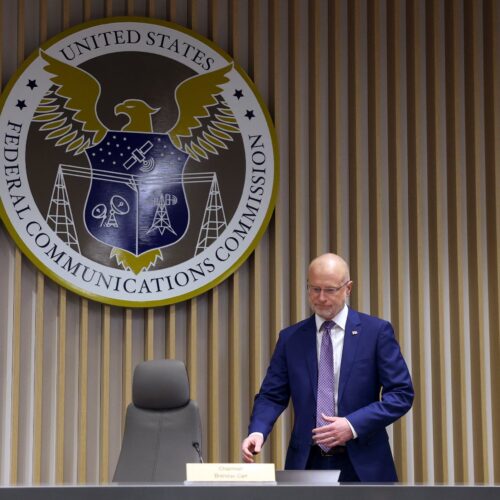
FCC accused of hiding Chairman Carr's messages with DOGE and Musk
FCC refuses to provide messages, has "wasted a year" of court's time, filing says.
Signal weather
Momentum is building quickly, so this card is a good early entry point into the topic.
Why now
Fresh coverage with immediate momentum.
More from Ars Technica
Fresh reporting and follow-up coverage from the same newsroom.
South Korea plans to train entire military as "drone warriors"
Half-million strong military will train on drones as “universal combat tool.”
Signal weather
Momentum is building quickly, so this card is a good early entry point into the topic.
Why now
Fresh coverage with immediate momentum.
Streaming services’ obnoxiously loud ads become illegal on July 1 in California
Illinois passed a similar law, giving services more incentive to make ads less booming.
Signal weather
Momentum is building quickly, so this card is a good early entry point into the topic.
Why now
Fresh coverage with immediate momentum.
Russian citizens told "switch to Android" after Apple blocks key Russian apps
Russian government lashes out at Apple's "bizarre" decisions.
Signal weather
Momentum is building quickly, so this card is a good early entry point into the topic.
Why now
Fresh coverage with immediate momentum.

NYT slams Microsoft for building copyright-infringing supercomputer for OpenAI
NYT shifts OpenAI/Microsoft copyright claims after SCOTUS ruling against Sony.
Signal weather
Momentum is building quickly, so this card is a good early entry point into the topic.
Why now
Fresh coverage with immediate momentum.