Critical Copilot vulnerability allowed hackers to seal 2FA code from users
SearchLeak exploit shows why the industry's approach to LLM security fails over and over.
Signal weather
Rising
Momentum is building quickly, so this card is a good early entry point into the topic.
Last Tuesday, Microsoft patched a vulnerability it rated as max critical in its M365 Copilot AI platform. On Monday, the researchers who discovered the vulnerability and reported it to Microsoft revealed how their proof-of-concept exploit could retrieve 2FA codes and other sensitive data from emails accessible to Copilot. Microsoft and other LLM providers have been unable to prevent their products from complying with malicious requests to reveal data. The root cause: AI bots are unable to distinguish between instructions provided by users and those snuck into third-party content the models are summarizing, drafting responses to, or using to perform other actions on behalf of the user. With no way to secure this crucial boundary, Microsoft and its peers are left to erect complicated and ad hoc guardrails designed to rein in the consequences of this incurable gullibility. Jumping over guardrails One guardrail built into Copilot and most other LLMs prevents them from submitting web forms, sending emails, and taking similar actions that can be used to exfiltrate data from the user. To work around this, LLM hackers turned to markup language, which, among other things, allows users to add formatting elements such as headings, lists, and links to text without the need for HTML tags. Another workaround is to wrap sensitive data inside HTML tags such as and . In either case, a web request showing the data hits the attacker’s web server, where the secret information is captured in logs. Read full article Comments
Stay on the signal
Follow Critical Copilot vulnerability allowed hackers to seal 2FA code from users
Follow this story beyond a single article: new follow-ups, adjacent sources, and the evolving storyline.
Story map
Understand this topic fast
A quick entry into the story: why it matters now, who is involved, and where to go next for context.
Why it matters now
Topic constellation
Open the live map for this story
See which entities, story threads, sources, and follow-up articles shape this story right now.
Click nodes to continue
Entity pages
Story timeline
Continue with this story
A short sequence of events and follow-up stories to understand the arc quickly.
How reliable this looks
Signal and trust for Ars Technica
This source works at a rapid pace: 100% of recent stories land in the hot window, and 0% carry visible search signal.
Reliability
92
Freshness
100
Sources in storyline
1
Related articles
More stories that share tags, source, or category context.
The Ars Technica 2026 Reader Survey: Let your voice be heard!
Tell us how you read Ars, and what you'd like to see more (or less!) of on the front page.
Signal weather
Momentum is building quickly, so this card is a good early entry point into the topic.
Why now
Fresh coverage with immediate momentum.
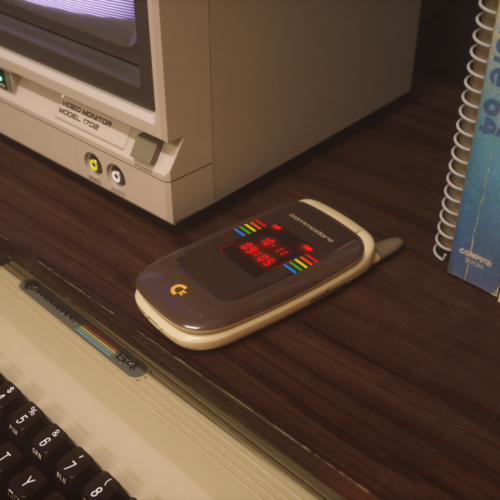
Commodore’s newest gadget is a flip phone that blocks social media and browsers
Commodore's Call Back 8020 is a phone “where the customer is not the product."
Signal weather
Momentum is building quickly, so this card is a good early entry point into the topic.
Why now
Fresh coverage with immediate momentum.

Key mission for Europe's commercial space enterprise scrubbed again
Isar Aerospace is not hurting for money, but it is sorely lacking in the currency of flight experience.
Signal weather
Momentum is building quickly, so this card is a good early entry point into the topic.
Why now
Fresh coverage with immediate momentum.

Heart protection from COVID shots remains amid updates, study finds
Despite continued benefits, anti-vaccine rhetoric has driven down vaccination.
Signal weather
Momentum is building quickly, so this card is a good early entry point into the topic.
Why now
Fresh coverage with immediate momentum.
More from Ars Technica
Fresh reporting and follow-up coverage from the same newsroom.
The Ars Technica 2026 Reader Survey: Let your voice be heard!
Tell us how you read Ars, and what you'd like to see more (or less!) of on the front page.
Signal weather
Momentum is building quickly, so this card is a good early entry point into the topic.
Why now
Fresh coverage with immediate momentum.
Commodore’s newest gadget is a flip phone that blocks social media and browsers
Commodore's Call Back 8020 is a phone “where the customer is not the product."
Signal weather
Momentum is building quickly, so this card is a good early entry point into the topic.
Why now
Fresh coverage with immediate momentum.
Key mission for Europe's commercial space enterprise scrubbed again
Isar Aerospace is not hurting for money, but it is sorely lacking in the currency of flight experience.
Signal weather
Momentum is building quickly, so this card is a good early entry point into the topic.
Why now
Fresh coverage with immediate momentum.
Heart protection from COVID shots remains amid updates, study finds
Despite continued benefits, anti-vaccine rhetoric has driven down vaccination.
Signal weather
Momentum is building quickly, so this card is a good early entry point into the topic.
Why now
Fresh coverage with immediate momentum.