Contrary to popular superstition, AES 128 is just fine in a post-quantum world
A stubborn misconception is hampering the already hard work of quantum readiness.
Signal weather
Stable
The story has moved beyond the first headline and now acts as a reliable context anchor.

With growing focus on the existential threat quantum computing poses to some of the most crucial and widely used forms of encryption, cryptography engineer Filippo Valsorda wants to make one thing absolutely clear: Contrary to popular mythology that refuses to die, AES 128 is perfectly fine in a post-quantum world. AES 128 is the most widely used variety of the Advanced Encryption Standard, a block cipher suite formally adopted by NIST in 2001. While the specification allows 192- and 256-bit key sizes, AES 128 was widely considered to be the preferred one because it meets the sweet spot between computational resources required to use it and the security it offers. With no known vulnerabilities in its 30-year history, a brute-force attack is the only known way to break it. With 2128 or 3.4 x 1038 possible key combinations, such an attack would take about 9 billion years using the entire bitcoin mining resources as of 2026. It boils down to parallelization Over the past decade, something interesting happened to all that public confidence. Amateur cryptographers and mathematicians twisted a series of equations known as Grover’s algorithm to declare the death of AES 128 once a cryptographically relevant quantum computer (CRQC) came into being. They said a CRQC would halve the effective strength to just 264, a small enough supply that—if true—would allow the same bitcoin mining resources to brute force it in less than a second (the comparison is purely for illustration purposes; a CRQC almost certainly couldn’t run like clusters of bitcoin ASICs and more importantly couldn’t parallelize the workload as the amateurs assume).Read full article Comments
Stay on the signal
Follow Contrary to popular superstition, AES 128 is just fine in a post-quantum world
Follow this story beyond a single article: new follow-ups, adjacent sources, and the evolving storyline.
Story map
Understand this topic fast
A quick entry into the story: why it matters now, who is involved, and where to go next for context.
Why it matters now
Topic constellation
Open the live map for this story
See which entities, story threads, sources, and follow-up articles shape this story right now.
Click nodes to continue
Entity pages
Story timeline
Continue with this story
A short sequence of events and follow-up stories to understand the arc quickly.
How reliable this looks
Signal and trust for Ars Technica
This source works at a rapid pace: 100% of recent stories land in the hot window, and 0% carry visible search signal.
Reliability
92
Freshness
100
Sources in storyline
1
Related articles
More stories that share tags, source, or category context.
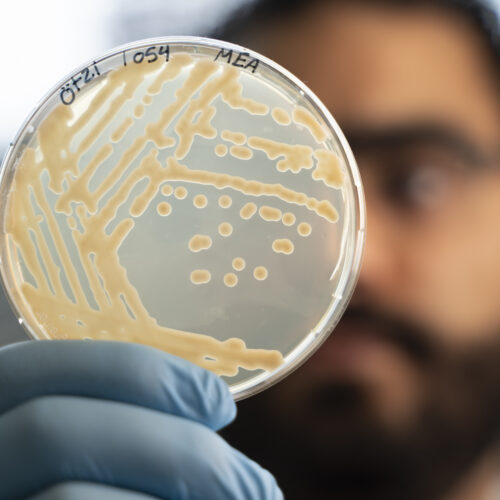
Some ancient microbes frozen with Ötzi the Iceman are still growing
What’s the difference between a person, an artifact, and an ecosystem?
Signal weather
Momentum is building quickly, so this card is a good early entry point into the topic.
Why now
Fresh coverage with immediate momentum.

Baby botulism outbreak: FDA still doesn't know cause—or how to prevent it
In the end, the three companies involved all point the finger at each other.
Signal weather
Momentum is building quickly, so this card is a good early entry point into the topic.
Why now
Fresh coverage with immediate momentum.

How a USB-connected speaker can infect a PC without ever being touched
Seller of the Sound Blaster Katana V2X doesn't consider the behavior a vulnerability.
Signal weather
Momentum is building quickly, so this card is a good early entry point into the topic.
Why now
Fresh coverage with immediate momentum.
Small modular nuclear reactor reaches criticality in first test
The reactor, from a startup called Antares, isn't ready to generate power yet.
Signal weather
Momentum is building quickly, so this card is a good early entry point into the topic.
Why now
Fresh coverage with immediate momentum.
More from Ars Technica
Fresh reporting and follow-up coverage from the same newsroom.

Scientists ejected from diabetes conference for distributing journal reprints
Those ousted included ADA journal editor-in-chief Steven Kahn and former ADA president Desmond Schatz
Signal weather
Momentum is building quickly, so this card is a good early entry point into the topic.
Why now
Fresh coverage with immediate momentum.
Some ancient microbes frozen with Ötzi the Iceman are still growing
What’s the difference between a person, an artifact, and an ecosystem?
Signal weather
Momentum is building quickly, so this card is a good early entry point into the topic.
Why now
Fresh coverage with immediate momentum.
Baby botulism outbreak: FDA still doesn't know cause—or how to prevent it
In the end, the three companies involved all point the finger at each other.
Signal weather
Momentum is building quickly, so this card is a good early entry point into the topic.
Why now
Fresh coverage with immediate momentum.
How a USB-connected speaker can infect a PC without ever being touched
Seller of the Sound Blaster Katana V2X doesn't consider the behavior a vulnerability.
Signal weather
Momentum is building quickly, so this card is a good early entry point into the topic.
Why now
Fresh coverage with immediate momentum.